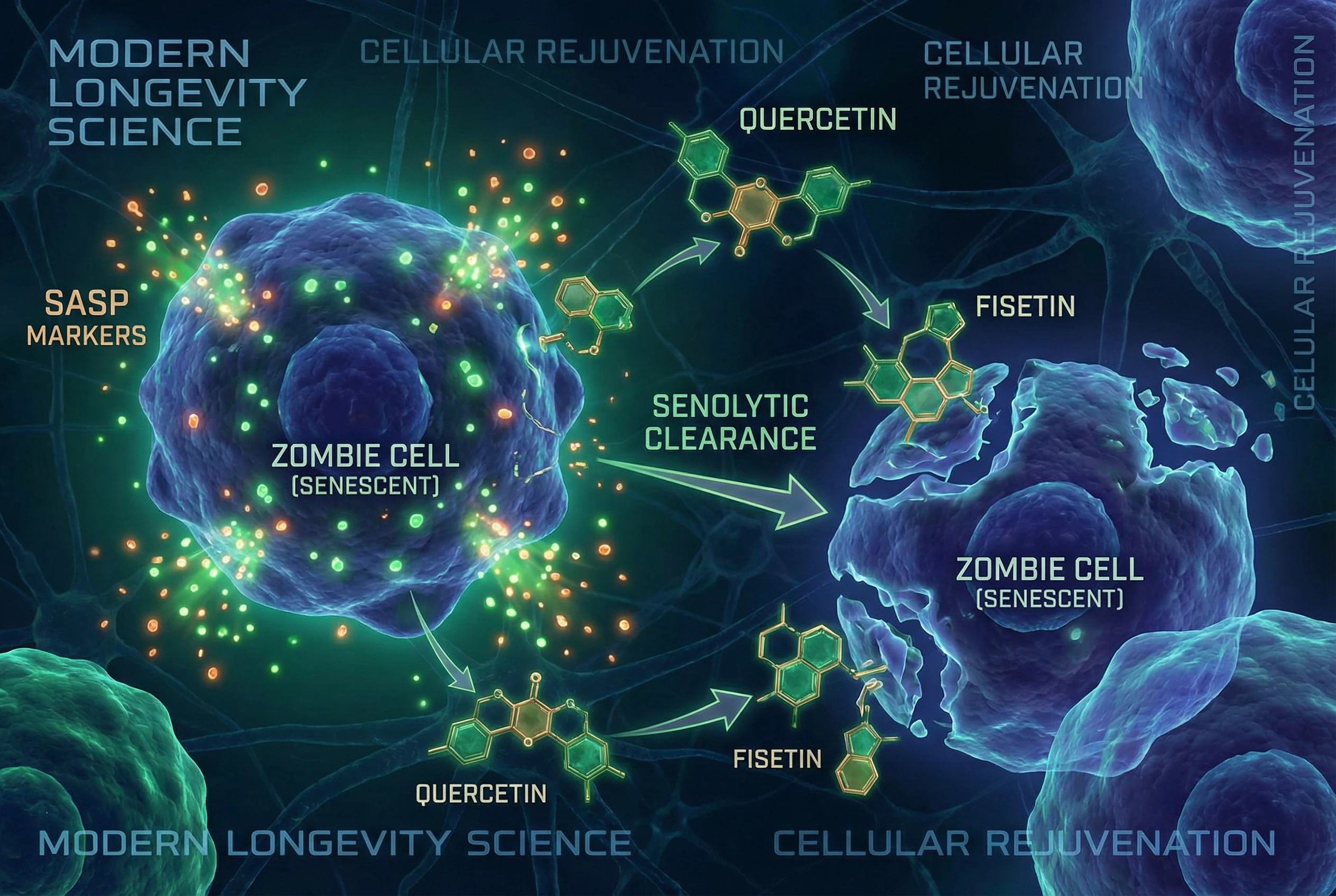
If you have taken NMN or read enough user reports about it, one pattern shows up quickly: some people describe clearer energy, better exercise tolerance, or less fatigue, while others notice very little. That difference does not automatically mean the supplement is fake or that the positive reports are exaggerated. It usually means NAD+ biology is more complicated than a single precursor in, a single result out.
NMN sits inside a larger metabolic system. Cells need to absorb it, convert it, recycle NAD+ after it is used, and avoid losing too much NAD+ to enzymes that break it down. Two of the most important pieces in that system are CD38, a major NAD+-consuming enzyme that tends to rise with age and inflammation, and NAMPT, the rate-limiting enzyme in the NAD+ salvage pathway that helps recycle nicotinamide back toward NAD+ production. When CD38 activity is high or NAMPT activity is low, the same NMN dose may produce a very different outcome from one person to the next.1 2
If you want the basic physiology first, start with our guide to how NMN works as an NAD+ precursor. If you want the broader evidence picture, our review of whether NAD supplements work in practice is the best companion piece.
The Real Question Is Not Only Whether NMN Raises NAD+
Most discussions around NMN start and end with one claim: NMN raises NAD+. That is partly true, but it leaves out the part that matters most in practice. A rise in blood NAD+-related metabolites is not the same thing as a meaningful improvement in how a specific tissue functions. Muscle, liver, vascular tissue, adipose tissue, and immune cells do not all handle NAD+ metabolism in the same way.1
The body maintains NAD+ through several interconnected pathways, but in many tissues the salvage pathway is the main one. In plain terms, the salvage pathway recycles nicotinamide back toward NMN and then NAD+ instead of building NAD+ from scratch every time. That recycling process matters because NAD+ is constantly being used by sirtuins, PARPs, CD38, and other enzymes involved in energy metabolism, DNA repair, stress signaling, and inflammation.1
| Component | Main role | Why it matters for NMN response |
|---|---|---|
| NMN | Direct NAD+ precursor | Supplies raw material, but does not control the whole pathway |
| NAMPT | Rate-limiting salvage enzyme | Helps determine how efficiently cells recycle nicotinamide back toward NAD+ |
| NMNAT enzymes | Convert NMN to NAD+ | Final intracellular step before usable NAD+ is formed |
| CD38 | Consumes NAD+ and related metabolites | Can increase NAD+ loss, especially in inflammatory states |
| PARPs / sirtuins | Use NAD+ for repair and regulation | Compete for the same NAD+ pool during stress or damage |
This helps explain why identical supplementation protocols can lead to different results. One person may have a relatively favorable setup: lower inflammatory burden, better mitochondrial fitness, healthier body composition, and stronger NAD+ recycling. Another person may have obesity, poor sleep, sedentary muscle, or chronic low-grade inflammation that pushes NAD+ turnover in the wrong direction. In both people, NMN may increase circulating metabolites. Only one may notice a clear functional change.
CD38 Is One of the Main Reasons NAD+ Falls Faster With Age
CD38 is a membrane-associated enzyme that is highly expressed in many immune cells and also appears in other tissues. It plays a normal role in immune signaling and calcium-related pathways, so it is not simply a “bad” molecule. The problem is that CD38 expression and activity tend to rise with aging and chronic inflammation, which can accelerate NAD+ breakdown.2
That pattern matters because age-related NAD+ decline is not driven only by lower production. It is also driven by higher consumption. In older tissues, researchers increasingly describe CD38 as one of the major NAD+-depleting enzymes. Inflammatory cytokines, senescent cell signaling, and immune-cell remodeling can all push CD38 upward, especially in metabolically stressed tissues such as visceral fat and liver.2
Practical meaning: when CD38 activity is higher, the body may “spend” NAD+ faster than expected, so a standard NMN dose may produce a weaker or shorter-lived effect.
The link to inflammaging is especially important. Inflammaging refers to persistent, low-grade inflammation that often rises with age even in the absence of acute infection. It is associated with obesity, insulin resistance, immune dysregulation, and cellular senescence. Senescent cells secrete inflammatory signals that can recruit or reprogram immune cells, and those immune changes may further increase CD38 expression. This creates a plausible cycle: more inflammatory signaling, more CD38, lower NAD+, and lower metabolic resilience.2
That does not mean every person with higher inflammation will feel no effect from NMN. It means they may need to think about the terrain around the supplement, not just the supplement itself. This is one reason we often recommend reading our article on how to support NAD+ naturally through sleep, exercise, fasting, and diet alongside any supplement-specific guide.
NAMPT Helps Explain Why Some Bodies Recycle NAD+ Better Than Others
If CD38 acts like a drain, NAMPT acts like part of the recycling machinery. NAMPT, short for nicotinamide phosphoribosyltransferase, is widely described as the rate-limiting step in the mammalian NAD+ salvage pathway. It helps convert nicotinamide, together with PRPP, into NMN, which then proceeds toward NAD+ formation.1
That matters even if you are taking NMN directly. Why? Because NAD+ is always being consumed and then partially recycled back through nicotinamide. The overall response to supplementation depends not only on how much precursor enters the system, but also on how well the body keeps recycling and conserving the pool after that precursor is used.
Aging, obesity, and chronic metabolic stress have been associated with lower intracellular NAMPT activity in several tissues, while exercise training has been associated with higher skeletal-muscle NAMPT expression.1 This gives a biologically plausible explanation for a common real-world pattern: people with better metabolic fitness often seem to get more noticeable benefit from the same intervention.
| Higher-likelihood response setting | Lower-likelihood response setting |
|---|---|
| Better insulin sensitivity | Greater metabolic dysfunction |
| Regular aerobic or resistance training | Sedentary lifestyle |
| Lower inflammatory burden | Higher chronic inflammatory load |
| Stronger sleep and circadian habits | Fragmented sleep and recovery |
| Better tissue-level NAD+ recycling | Weaker salvage-pathway efficiency |
This is also why the phrase “NMN did nothing for me” has limited scientific value on its own. It may reflect dose, product quality, expectations, or time horizon. But it may also reflect differences in the enzyme environment that determines where NAD+ goes and how fast it disappears.
Human Trials Show a More Modest Picture Than Marketing Claims
The most consistent human finding so far is not dramatic anti-aging reversal. It is much narrower: NMN can raise NAD+-related measures in blood, and some trials report modest improvements in selected metabolic, fatigue, or performance-related outcomes. Those outcomes are neither uniform nor guaranteed.3 4
A 2024 systematic review of randomized controlled trials concluded that NMN may have favorable effects in some areas of physical performance and biological parameters, but the evidence base remained limited, heterogeneous, and short term.3 A separate meta-analysis focused on glucose and lipid outcomes found that across randomized trials, NMN did not produce strong or consistent benefit on most cardiometabolic markers, despite ongoing interest in specific subgroups and mechanisms.4
That overall picture fits what clinicians and careful readers should expect.
| What human studies suggest | What human studies do not prove |
|---|---|
| NMN can increase NAD+-related biomarkers | NMN reliably improves all energy, cognition, or aging outcomes |
| Some groups may see modest metabolic or fatigue benefits | Blood biomarker gains always translate into tissue-level clinical change |
| Short-term tolerability appears generally acceptable in trials | Long-term disease prevention or lifespan extension in humans |
| Response varies by baseline health and study design | That everyone should feel a noticeable effect |
This is a useful place to separate mechanistic plausibility from clinical certainty. The mechanistic story around NMN, NAD+, CD38, and NAMPT is strong enough to justify ongoing research. The clinical story in humans is still early. That is why our guidance across the site stays conservative: NMN may support aspects of NAD+ biology, but human evidence is still limited, and effect size appears to vary substantially.
Why Blood NAD+ Can Rise Without a Dramatic Subjective Effect
One of the easiest ways to misunderstand NMN is to assume that a measurable increase in blood NAD+ means you should feel a large change in day-to-day life. That expectation is too simple for at least four reasons.
First, blood is not the same as tissue. A favorable blood signal does not tell you exactly what happened in skeletal muscle, liver, endothelium, or brain.
Second, some tissues may be constrained downstream. If mitochondrial function, insulin sensitivity, or inflammatory signaling is already impaired, a higher precursor supply may not translate into a dramatic functional shift over a short period.
Third, the body is balancing production against consumption. Even if more NAD+ is produced, it may also be used faster under conditions of oxidative stress, immune activation, or DNA-repair demand.1 2
Fourth, outcomes people expect are often subjective. “More energy” or “better focus” can depend on sleep debt, calorie intake, caffeine use, overtraining, mood, medications, circadian timing, and many other variables. That does not make the experience invalid. It means anecdotal response is noisy.
The Lifestyle Factors Most Likely to Change Response
When users ask why one protocol “works” for one person and not another, the answer is often found outside the capsule. The strongest modifiable factors likely include sleep quality, exercise status, body composition, inflammatory burden, and overall metabolic health.1 2
Regular exercise is one of the most plausible response enhancers because it can improve mitochondrial function, insulin sensitivity, and skeletal-muscle NAMPT expression.1 Better sleep and circadian alignment may also matter because NAD+ metabolism, cellular repair, and metabolic signaling all have circadian components. Improved diet quality and weight management may reduce the inflammatory environment that pushes CD38 higher. None of these factors guarantee a result, but together they may help make NAD+ biology more responsive.
This is also where readers sometimes ask about compounds that may influence CD38-related pathways. We cover that narrower mechanistic question in our review of NMN and apigenin. That article is useful context, but it should not be read as proof that combining supplements solves the underlying issue. In most cases, the better first move is to improve the factors that keep inflammation elevated in the first place.
A More Realistic Way to Think About NMN
A realistic framework looks like this: NMN is not a stand-alone switch for energy or longevity. It is a precursor placed into a dynamic system shaped by age, inflammation, tissue demand, body composition, activity level, and salvage-pathway efficiency.
For that reason, the question “Does NMN work?” is usually less useful than these questions:
- What is the person’s baseline metabolic and inflammatory state?
- How favorable is their NAD+ recycling environment?
- Are they expecting a biomarker change, a subjective feeling, or a clinical outcome?
- Have sleep, exercise, diet, and recovery been addressed well enough for the biology to respond?
Those questions are also more consistent with the evidence. They do not assume NMN is ineffective. They simply recognize that response variability is part of the mechanism, not a side issue.
Bottom Line
The best current explanation for variable NMN response is that NAD+ status depends on both input and turnover. NMN can increase precursor availability, but that does not override the enzymes and tissue conditions that determine whether NAD+ is retained, recycled, and translated into a meaningful effect.
CD38 helps explain why inflammatory and older tissues may lose NAD+ faster. NAMPT helps explain why some people recycle and sustain NAD+ better than others. Human trials support cautious interest, not certainty: NAD+-related biomarkers often improve, but real-world benefits remain modest and uneven across populations.2 3 4
If you are trying to interpret your own experience with NMN, the most evidence-based conclusion is not that you either found a miracle or wasted your money. It is that response depends on biology that can differ substantially from person to person. That is exactly why supplement outcomes are often more variable than marketing language suggests.