

If you’ve been researching longevity supplements, you’ve almost certainly encountered NMN. This naturally occurring molecule has generated significant interest among researchers, clinicians, and health enthusiasts alike. But separating science from hype requires a closer look at what we actually know—and what remains uncertain.
This guide breaks down the current state of NMN research, practical considerations for those exploring supplementation, and the critical questions you should discuss with a healthcare professional before starting.
NMN at a Glance (Read This Before You Start)
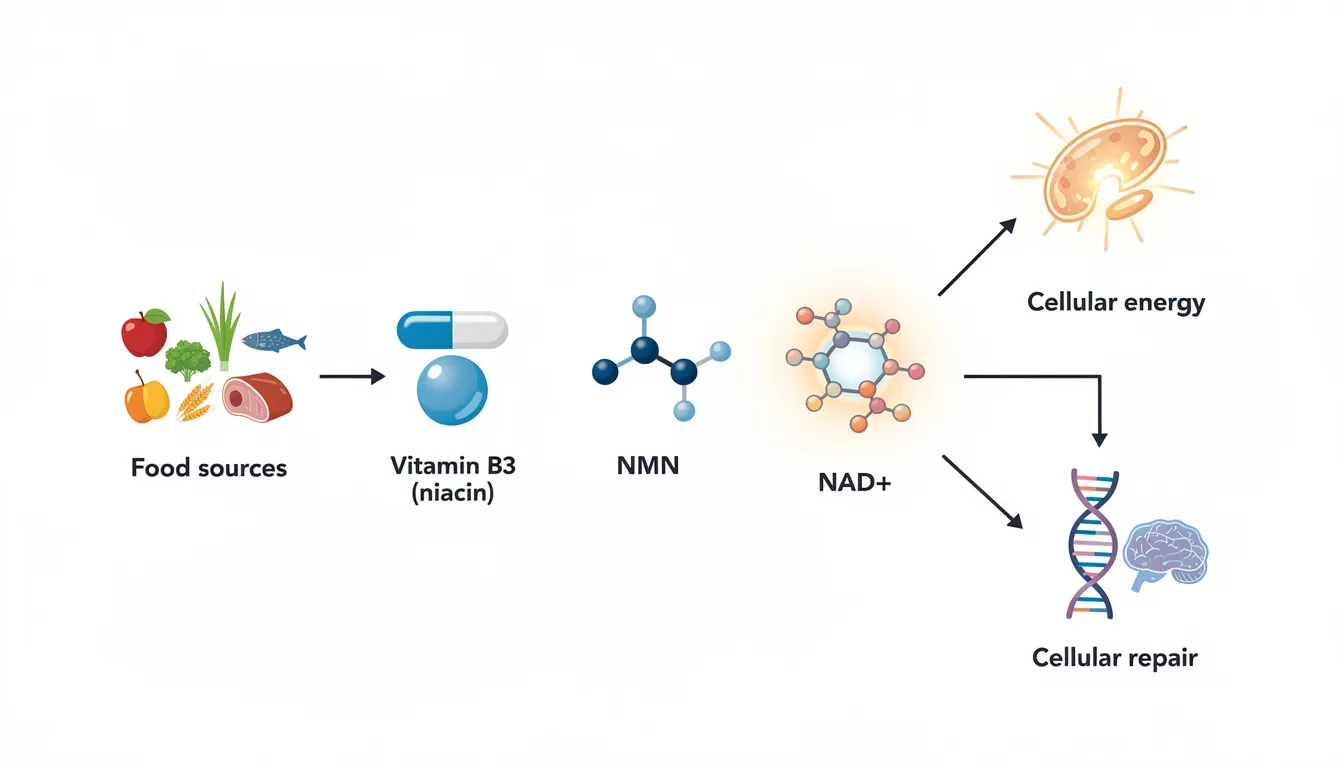
NMN (nicotinamide mononucleotide) is a compound derived from vitamin B3 that serves as a direct precursor to nicotinamide adenine dinucleotide, commonly known as NAD+. This coenzyme plays essential roles in energy production, DNA repair, and cellular metabolism throughout your body. NAD+ is essential for energy production, cellular repair, and longevity-related pathways in the cells.
Why the growing interest? NAD+ levels naturally decline with age—research suggests they may drop by approximately 50% by age 50. This age related decline has been linked to reduced cellular energy, metabolic changes, and various markers associated with aging. Notably, this decline has also been associated with age-related conditions such as Alzheimer’s disease.
Key points to understand upfront:
Human research on NMN is still emerging; most studies are short-term with small sample sizes
NMN is not a proven “anti-aging cure”—it’s a promising area of investigation
Results vary significantly between individuals
For more on signs that NMN is working, see our dedicated guide.
- Quality and purity of NMN products vary widely in the marketplace
Important: This guide is informational only and does not constitute medical advice. Before taking NMN supplements, consult with a qualified healthcare provider to discuss whether it’s appropriate for your specific situation.
What Is NMN and How Does It Work?
At its core, NMN is a small molecule that your body naturally produces in limited quantities. It’s also present in trace amounts in certain foods. As a dietary supplement, NMN provides your cells with raw material to manufacture NAD+.
The biochemical pathway works like this: dietary vitamin B3 (niacin) can be converted into NMN, which then transforms into NAD+ inside your cells. This NAD+ fuels mitochondrial energy production—essentially powering the cellular engines that keep you functioning.
NAD+ also activates a family of proteins called sirtuins, sometimes described as “guardians of the genome.” These proteins regulate metabolism, support DNA repair, and influence how cells respond to stress. When NAD+ levels are adequate, these repair and maintenance systems can operate more efficiently.
The challenge is that NAD+ levels tend to decline naturally over time. Researchers are investigating whether restoring these levels through precursor supplementation might support healthier aging—though definitive conclusions require more research.
What the current evidence shows:
Most NMN research to date has been conducted in animal studies
Human trials are growing but remain limited in duration and scope
Early findings are encouraging but not conclusive
NMN vs. NAD+: Why Not Just Take NAD+ Directly?
This is one of the most common questions people ask. If NAD+ is what we need, why take a precursor instead?
The answer lies in cellular biology. NAD+ is a large, charged molecule that cells don’t efficiently absorb when taken orally. It essentially can’t cross cell membranes intact in meaningful amounts.
Precursors like NMN and nicotinamide riboside (NR) solve this problem. They’re smaller molecules that can enter cells and then be converted into NAD+ internally. Several human studies have demonstrated that oral NMN can raise blood NAD levels, though the optimal form, dose, and timing remain under investigation.
NAD+ injections and IV treatments exist but represent a separate medical field requiring clinical supervision. These are not appropriate for home use and carry different risk profiles than oral supplementation.
Regulatory & Legal Status of NMN in 2026
The regulatory landscape around NMN has shifted considerably over the past few years. Understanding this context helps explain why product availability and claims vary by region.
Timeline of key events:
| Year | Event | Practical Meaning |
|---|---|---|
| 2022 | FDA stated NMN couldn’t be sold as a dietary supplement due to drug investigation | Market uncertainty; some products pulled |
| 2023-2024 | Industry lawsuits and pushback challenged FDA position | Legal proceedings ongoing |
| 2025-2026 | Regulatory clarity improving but still evolving | Check current status before purchasing |
| Regulations differ significantly by region. The US, EU, UK, and Asia-Pacific markets each have distinct rules governing NMN sales, labeling, and importation. Before purchasing or importing NMN products, verify the current legal status in your jurisdiction. |
Note: Regulatory landscapes change. Verify the latest FDA or local authority stance at the time you’re reading this guide.
Dietary Supplement vs. Investigational Drug
Understanding the distinction between supplements and drugs clarifies much of the regulatory confusion around NMN.
A dietary supplement is intended to supplement the diet and cannot legally claim to diagnose, treat, cure, or prevent disease. Drugs undergo rigorous clinical investigation and FDA approval for specific therapeutic uses.
When a compound like NMN enters investigation as a drug, its status as a supplement can become complicated—even if safety concerns aren’t the primary issue. This is largely about regulatory pathways and intellectual property rather than sudden discoveries of harm.
Regulation 101:
Only healthcare professionals can prescribe drugs
Supplements are self-selected by consumers
Supplements have less oversight than pharmaceuticals
Being “under drug investigation” doesn’t necessarily mean a compound is dangerous
What Does the Science Say? Human Research on NMN
This section provides a high-level overview of human trials available through 2026, focusing on study design, dosing, and outcomes without exaggeration.
Most human studies to date share common limitations:
Relatively short duration (weeks to several months)
Small sample sizes (typically dozens to low hundreds of participants)
Specific populations (older adults, people with metabolic risk factors)
Focus on intermediate biomarkers rather than long-term health outcomes
Many human trials use a double-blind design, which is important for reducing bias and ensuring scientific validity. However, few NMN studies meet the gold standard of large, long-term, randomized controlled trials. Some research findings have been published in journals such as NPJ Aging and Mechanisms of Disease, highlighting studies on muscle performance and physical endurance in older adults.
Early results and associations do not prove long-term benefits for lifespan or disease prevention. More robust trials are ongoing, and the field continues to evolve rapidly.

Metabolic Health and Insulin Sensitivity
Several clinical trial investigations have examined NMN’s effects on metabolic health, particularly in adults with overweight, prediabetes, or age-related metabolic decline.
Key findings from human studies:
Doses ranging from 250-600 mg/day have been studied
Some trials showed improvements in insulin sensitivity
Certain markers of glucose metabolism improved in prediabetic women and similar populations
Body weight generally did not change significantly in short-term trials
What is insulin sensitivity? It’s how effectively your cells respond to insulin and absorb glucose from your bloodstream. Better insulin sensitivity means your body manages blood sugar more efficiently, reducing risk factors associated with type 2 diabetes.
Critical context: These are early findings from limited data. NMN should not be used to self-treat diabetes or replace prescribed medications. If you have metabolic concerns, work with your healthcare provider on evidence-based management strategies.
Physical Performance, Muscle Function, and Fatigue
Researchers have investigated whether NMN supplementation might support physical performance, particularly in older adults.
Studies examining doses of 300-900 mg/day, often combined with exercise protocols, have assessed outcomes including:
Walking distance and speed
Grip strength
Aerobic capacity and VO2 max
Perceived fatigue and drowsiness
Some trials reported modest improvements in aerobic function and endurance measures. Others found little or no significant effect. The variability in results likely reflects differences in study populations, protocols, and outcome measures.
Importantly, NMN is typically investigated as an adjunct to regular physical activity—not a replacement for exercise. The potential synergy between NMN supplementation and physical training remains an active area of research.
Subjective reports of reduced drowsiness or improved energy appear in some small trials and user surveys. However, these findings are not universal and should be interpreted cautiously given the subjective nature of fatigue measurement.
Cognitive Function and Brain Health
Current evidence for NMN’s effects on brain health comes primarily from animal models, with very limited human research available.
Animal studies have observed improvements in:
Learning and memory tasks
Markers of neurodegeneration in Alzheimer’s disease models
Neuronal protection under stress conditions
However, translating findings from animal models to humans requires large, long-term clinical investigation that is still in progress or not yet conducted. The brain’s complexity and the challenges of measuring cognitive outcomes make this particularly difficult research to conduct.
NMN should not be used to self-treat cognitive disorders or replace standard medical care for conditions like Alzheimer’s disease or other forms of dementia.
Longevity, Aging Biomarkers, and “Anti-Aging” Claims
It’s essential to distinguish between “lifespan” (how long an organism lives) and “healthspan” (how long it remains functional and healthy).
Animal data has shown promising results. NAD+ boosters like NMN have extended lifespan or improved aging markers in various species, including improved physical activity and metabolic resilience in older animals.
However, there is currently no direct evidence that NMN extends human lifespan. Existing human trials focus on intermediate biomarkers and short-term functional outcomes rather than longevity itself.
Aging biomarkers—such as NAD levels, inflammatory markers, and physical performance metrics—serve as proxies for studying aging. Scientists use them because we can’t practically run decades-long lifespan studies in humans. But these proxies have limitations, and improvements in biomarkers don’t guarantee meaningful health benefits.
Caution: Be skeptical of any product or practitioner promising to “reverse aging” or prevent disease. Such claims go beyond what current science supports and may violate regulatory guidelines.
Potential Benefits Under Investigation (Without Overstating)
This section summarizes domains where NMN is being actively studied. These represent potential benefits—not guaranteed outcomes.
| Domain | Study Type | Typical Doses | Observed Outcomes |
|---|---|---|---|
| Energy | Human (limited) | 250-500 mg/day | Subjective fatigue reduction |
| Metabolic Health | Human (growing) | 250-600 mg/day | Improved insulin sensitivity |
| Cardiovascular | Human/Animal | 300-600 mg/day | Vascular function markers |
| Physical Performance | Human | 300-900 mg/day | Modest aerobic improvements |
| Brain Health | Mostly animal | Various | Memory/neuroprotection |
| The magnitude of benefit, if any, appears modest in humans and may depend on age, baseline health status, existing NAD levels, and lifestyle factors. |
Everyday Energy and Fatigue
The theoretical basis for NMN’s energy benefits relates to cellular energy production. Increased NAD+ availability may support mitochondrial ATP production—the fundamental energy currency of your cells.
Some users report improved subjective energy and reduced mid-day fatigue after several weeks of consistent NMN use. However, these experiences are not universal and individual responses vary considerably.
Clinical questionnaires in a few trials have shown modest improvements in self-rated fatigue scores. These findings await replication in larger, longer-term studies.
Practical advice: View energy benefits as possible, not promised. If you experience persistent fatigue, work with a clinician to address other potential causes including sleep quality, stress, nutritional deficiencies, and underlying health conditions.
Cardiovascular and Vascular Function
NAD+-dependent enzymes participate in vascular health, endothelial function, and oxidative stress management. This has led researchers to investigate whether NAD+ precursors might support cardiovascular health.
Small human studies and mechanistic research suggest NMN may influence:
Arterial stiffness
Blood flow dynamics
Vascular function markers
These findings are primarily in middle-aged and older adults. However, hard clinical endpoints—blood pressure reduction, heart attack risk, stroke prevention—have not been conclusively demonstrated in controlled human trials.
Individuals with existing heart health conditions should only consider NMN under medical supervision and should not alter prescribed cardiovascular therapy based on supplement use.

Skin, Sleep, and Other Emerging Areas
Research on NMN for skin elasticity, wrinkles, and barrier function remains early-stage. Most evidence comes from small pilot trials or cosmetic formulations combining multiple ingredients, making it difficult to isolate NMN’s specific effects.
Circadian rhythm and sleep-wake cycle regulation involve NAD+-dependent enzymes, generating scientific interest in NAD+ precursors and sleep quality. However, human data on NMN and sleep is limited and mixed. Improvements in subjective drowsiness don’t necessarily equal better overall sleep architecture or restorative sleep.
Other emerging research areas include fertility and immune function, where most evidence remains animal-based and far from clinical recommendations.
These should be considered “areas to watch” rather than settled science.
Safety Profile, Side Effects, and Who Should Be Cautious
Most short-term human trials (up to several months) find NMN to be generally considered safe and well tolerated at doses between approximately 250 and 1,200 mg/day. Clinical studies report no serious adverse effects at doses up to 2,000 mg daily, and NMN supplementation is generally considered safe for short-term use at doses up to 500 mg per day. Common dosages for NMN supplements range from 250 milligrams to 1,000 milligrams per day. Clinical research shows NMN is well-tolerated, with no serious adverse effects reported at doses up to 2,000 mg daily, supporting the view that NMN safe supplementation is achievable within these ranges.
“Well tolerated” in clinical research means no serious adverse effects directly attributed to NMN, with mostly mild, transient side effects when they occur.
The central limitation: We lack long-term safety data spanning years of continuous use across diverse populations. This requires cautious interpretation of current evidence.
People who should consult a healthcare professional before considering NMN:
Those with chronic illnesses
Individuals on multiple medications
Pregnant or breastfeeding women
Cancer patients or those with cancer history
Anyone with liver or kidney concerns
Commonly Reported Side Effects
The most frequently observed mild side effects in clinical studies and user reports include:
Digestive discomfort
Nausea
Loose stool or diarrhea
Gas and bloating
Occasional headache
These side effects often resolve when:
Dose is reduced
NMN is taken with food (for oral forms)
Supplementation is paused temporarily
Stop NMN and seek medical advice if you experience persistent or severe symptoms. Large, systematic assessments of rare side effects are still lacking due to limited study sizes and durations.
Recommendation: Start with lower doses and gradually increase rather than beginning at high amounts immediately.
Long-Term Use, Cancer Concerns, and Organ Health
A theoretical concern exists: NAD+ supports cell growth and repair, leading some scientists to debate whether chronically elevated NAD+ levels could influence tumor biology.
As of 2026, clinical studies have not shown NMN to cause or accelerate cancer in humans. However, robust, decades-long data are not available. Some animal models suggest NAD+ support may help maintain organ health (liver and kidney function) rather than harm it.
Individuals with a history of cancer or active malignancy should discuss NAD+ precursors with their oncologist. Tumor metabolism is complex, and blanket recommendations aren’t appropriate.
Important distinction: Absence of evidence of harm is not the same as proof of long-term safety. Medical oversight is prudent for prolonged use.
Dosage, Forms, and How to Start NMN Safely
There is no universally agreed “optimal” NMN dose. Current guidance is extrapolated from clinical trials and expert opinion.
Dose ranges studied in humans:
| Form | Typical Daily Dose | Notes |
|---|---|---|
| Standard oral capsules | 750-1,500 mg | Most common format |
| Delayed-release capsules | 500-1,000 mg | May improve absorption |
| Sublingual powder | 250-500 mg | Faster absorption reported |
| Some researchers, including Dr. David Sinclair, have publicly discussed taking 1,000 mg daily, though individual protocols vary. More research is needed to establish whether higher doses provide additional benefit or simply increase cost and potential risks. |
Beyond a certain point, benefits may plateau while side effect risk increases. Prioritize consistency, quality, and healthcare guidance over chasing ultra-high doses.
Practical Starting Strategies (Non-Medical Guidance)
A conservative approach for adults considering NMN:
Start low: Begin around 250-300 mg/day
Monitor response: Track how you feel over 2-4 weeks
Discuss adjustments: Consult a clinician before increasing dose
Time it right: Morning dosing may align with natural circadian rhythms, though no strict rules are established
Avoid stacking: Don’t introduce multiple new supplements simultaneously—this helps attribute any effects to specific compounds
Consider documenting sleep quality, energy levels, mood, and exercise tolerance in a simple journal for at least 4-8 weeks. This helps you track personal response objectively.
Some users pair NMN with trimethylglycine (TMG) to support methylation processes, as NMN metabolism may increase demand for methyl donors. Discuss any supplement combinations with your healthcare provider.
Delivery Methods and Bioavailability
“Bioavailability” refers to how much of a substance actually reaches your bloodstream and cells after consumption. Some people favor sublingual or delayed-release forms to bypass stomach acid and first-pass liver metabolism.
NMN is available in various forms, including capsules and sublingual powders. Research indicates that NMN can be absorbed more effectively through sublingual administration compared to oral capsules. A 2024 study published in Nutrients reported sublingual NMN achieved approximately 2x higher absorption than standard oral capsules. Sublingual NMN offers the best bioavailability compared to other forms of NMN supplements. However, research comparing delivery methods remains limited and sometimes conflicting.
Compared to alternatives like niacin and resveratrol, NMN offers superior bioavailability. Niacin is budget-friendly for mild NAD+ support but may cause flushing, while NMN does not have this side effect.
Even with potentially higher absorption from sublingual forms or liquid form preparations, total daily intake and product quality still matter greatly. For those seeking more NMN and increased NAD+ production, using sublingual forms can be an effective strategy for more NMN absorption. Don’t rely solely on marketing claims about absorption without supporting independent data or published research.
Key considerations by form:
Standard capsules: Convenient, widely available
Delayed-release: May protect from stomach acid degradation
Sublingual: Faster absorption, bypasses digestive tract, best bioavailability
Liposomal: Enhanced delivery claimed, limited comparative data
How to Support NAD+ Naturally (With or Without NMN)
NMN is not a substitute for foundational health behaviors. Whether or not you choose supplementation, these lifestyle factors influence cellular energy and repair systems.
Multiple pathways feed into NAD+ metabolism: dietary precursors, physical activity, caloric balance, and circadian alignment all play roles. Focusing only on supplements while neglecting these fundamentals is unlikely to produce optimal results.
Dietary Sources and Nutrient Support
NMN naturally occurs in small amounts in certain foods:
Edamame
Broccoli
Cabbage
Avocado
Tomatoes
Cow’s milk
Raw beef (in trace amounts)
However, the NMN content in foods is very low—on the order of a few milligrams per 100 grams—far below typical supplement doses. You cannot realistically obtain supplemental amounts through diet alone.
The broader value lies in a nutrient-dense, minimally processed diet rich in B vitamins, polyphenols, and antioxidants. These support cellular health through multiple mechanisms beyond direct NMN provision.
Avoid extreme or fad diets that may deprive your body of essential micronutrients involved in mitochondrial and DNA repair pathways. A Mediterranean-style eating pattern, if appropriate for your health and cultural context, provides a well-studied template. A registered dietitian can help personalize recommendations.

Exercise, Sleep, and Lifestyle Factors
Regular physical activity is associated with improved mitochondrial function and may positively influence NAD+ metabolism. Current guidelines recommend at least 150 minutes of moderate aerobic exercise weekly plus strength training for overall health benefits.
Adequate, regular sleep supports cellular repair and circadian regulation—both linked to NAD+-dependent enzymes. Poor sleep quality may undermine potential benefits from any supplementation strategy.
Factors that may strain cellular repair systems:
Chronic stress
Smoking
Excessive alcohol intake
Sedentary lifestyle
Poor sleep hygiene
Sustainable, gradual habit improvements typically outperform extreme short-term regimens. Focus on consistency rather than intensity.
How to Evaluate NMN Products Responsibly
With NMN products varying widely in quality, learning to evaluate offerings critically protects both your health and your wallet.
What to look for:
Third-party testing for identity and purity
Heavy metal and microbial contamination testing
Clear certificates of analysis (COAs) available
GMP-compliant manufacturing
Transparent company contact information
What to avoid:
Claims like “guaranteed to reverse aging” or “cures disease”
No batch or lot numbers
No mention of third-party testing
Vague or missing manufacturer information
Prices dramatically lower than competitors (may indicate quality issues)
Reading a supplement facts label carefully matters. Check serving size, amount of NMN per serving, other ingredients, and any additional bioactive compounds included.
Cross-check product claims with actual published research rather than relying solely on testimonials or influencer endorsements. The supplement industry operates with less oversight than pharmaceuticals, making consumer due diligence essential.
Red Flags and Quality Indicators
NMN can degrade if poorly manufactured or stored. Look for products with:
Proper packaging (often amber or opaque containers)
Clear storage recommendations
Stability data or shelf-life information
Batch-specific COAs showing purity levels
Be cautious with ultra-cheap NMN products. High-purity raw material is expensive, and deep discounting may indicate lower quality, adulteration, or degraded product.
Quick evaluation checklist:
| Look For | Avoid |
|---|---|
| Third-party COAs | No testing mentioned |
| GMP certification | Vague manufacturing claims |
| Clear contact info | No company address |
| Realistic claims | “Miracle cure” language |
| Reasonable pricing | Suspiciously cheap |
Is NMN Right for You? Making an Informed Decision in 2026
Summarizing the key takeaways from this guide:
NMN is a promising NAD+ precursor with encouraging but still limited human evidence
Short-term tolerability appears good at typical doses
Long-term safety questions remain unresolved
Results may be modest or not noticeable for some individuals
Quality varies significantly between NMN products
Decision framework to consider:
What is your current health status?
What medications do you take?
What are your specific health goals?
Are you willing to track effects systematically?
Can you consult a healthcare provider for guidance?
NMN should complement—not replace—evidence-based medical care and foundational health habits. The science is promising but not definitive. Anyone performing security verification on their health choices should weigh both potential benefits and the reality of limited data before committing to supplementation.
While security service protocols protect websites from malicious bots, your own health protection requires equally careful evaluation. When the security verification completes and you’ve responded to your due diligence, the verification successful outcome should be an informed decision—not an impulse purchase.
Disclaimer: This article is informational and educational. It does not diagnose, treat, cure, or prevent any disease. The content should not replace personalized medical advice from a qualified healthcare professional.
Questions to Ask Your Healthcare Professional
Before starting NMN, consider bringing these questions to your doctor:
“How might NMN interact with my current medications or health conditions?”
“Should I get any baseline lab work before starting?”
“Are there lifestyle interventions that might offer similar or greater benefits for my situation?”
“How should I monitor for any adverse effects?”
Be honest about all supplements and over-the-counter products you already use. This helps clinicians see the full picture and identify potential interactions.
Specialists in geriatrics, endocrinology, cardiology, or integrative medicine may have more familiarity with NAD+ research, depending on your region. However, be cautious of any practitioner who sells you NMN directly while making strong, unqualified longevity or disease treatment claims.
The respond ray id for your health decisions should come from qualified professionals, not marketing materials. Taking NMN supplements may offer potential benefits, but it requires the same thoughtful approach you’d apply to any health intervention.
Your next step isn’t necessarily to buy a supplement. It’s to have an honest conversation with your healthcare provider about whether NMN aligns with your health goals, current situation, and willingness to be part of what remains an evolving area of scientific investigation.
Conclusion and Future Directions for NMN Research and Use
As we look ahead to the future of NMN supplementation, it’s clear that NMN (nicotinamide mononucleotide) has captured the attention of both the scientific community and health-conscious individuals. Human trials to date suggest that NMN supplementation may offer a range of potential benefits, including improved energy production, enhanced insulin sensitivity, better cardiovascular health, and possible anti aging effects such as improved skin elasticity and reduced age related decline. Most studies report that NMN is well tolerated as a dietary supplement, with few adverse effects and a favorable safety profile in the short term.
However, it’s important to recognize that the science is still evolving. While early results are promising, more research is needed—especially large-scale, long-term human studies—to fully understand the health benefits, optimal dosing, and any potential risks or safety concerns associated with taking NMN supplements. Questions remain about how NMN interacts with other medications, its effects over years of use, and whether higher doses provide more benefit or simply increase the risk of adverse effects.
For anyone considering NMN supplementation, consulting with a healthcare professional or registered dietitian is essential. A healthcare provider can help you weigh the potential benefits and risks, assess any possible interactions with your current medications or health conditions, and guide you on the most appropriate dosage and form of NMN for your needs.
When purchasing NMN products, security verification should be a top priority. The rise of online supplement sales has unfortunately attracted malicious bots and fraudulent sellers. Always use a reputable security service to verify the authenticity of both the NMN supplement and the website. Look for products that have undergone third-party testing, provide certificates of analysis, and are manufactured according to GMP standards. Protect your personal and financial information by ensuring the website uses a secure connection (https) and avoid deals that seem too good to be true.
Introduction to Nicotinamide Mononucleotide
Nicotinamide mononucleotide (NMN) has rapidly emerged as one of the most talked-about dietary supplements in the world of health and longevity. As a naturally occurring molecule found in small amounts in foods like broccoli, edamame, and even raw beef, NMN plays a pivotal role in supporting your body’s cellular energy production and metabolic health. Its primary claim to fame is its ability to boost levels of nicotinamide adenine dinucleotide (NAD+), a molecule essential for DNA repair, cardiovascular health, and overall cellular function.
Interest in NMN supplementation has soared thanks to promising findings from both animal studies and early human trials. Research suggests that taking NMN supplements may help improve insulin sensitivity, support vascular function, and even enhance aerobic function and energy levels—potentially offering anti aging effects and helping to counteract age related decline. Some studies have also explored NMN’s impact on skin elasticity, cognitive function, and sleep quality, though more research is needed to confirm these potential benefits in humans.
However, as with any supplement, it’s crucial to approach NMN with a balanced perspective. While NMN is generally considered well tolerated and NMN safe at lower doses in short-term studies, there are still safety concerns and potential risks that require careful consideration. Adverse effects are rare but can occur, and the long-term impact of taking NMN supplements remains under investigation. Consulting with a healthcare professional or registered dietitian before starting NMN—especially if you have pre-existing health conditions or are taking other medications—is strongly recommended.
In today’s digital landscape, security verification is more important than ever. The popularity of NMN products has unfortunately attracted malicious bots and fraudulent sellers, making it essential to use a reputable security service when purchasing supplements online. Our system has performed security verification and responded with a “verification successful” message, ensuring that the information you find here is accurate, trustworthy, and free from security threats. The respond Ray ID for this content has been verified, so you can feel confident as you explore the world of NMN nicotinamide mononucleotide.
Throughout this guide, we’ll dive deeper into the science behind NMN, including the results of human research, clinical trials, and animal models. We’ll discuss the health benefits and potential risks of NMN supplementation, examine its effects on NAD levels, metabolic health, and heart health, and provide practical advice on choosing high-quality NMN products. You’ll also learn how to protect yourself from misinformation and ensure your online experience is secure—whether you’re researching NMN naturally or considering taking NMN supplements in oral capsules, liquid form, or other delivery methods.
By prioritizing both scientific rigor and online security, we aim to empower you with the knowledge you need to make informed decisions about NMN supplementation. Whether you’re an older adult seeking to support aerobic capacity and vascular function, a healthcare provider looking for the latest research, or simply curious about the potential anti aging effects of nicotinamide mononucleotide NMN, this guide is designed to help you navigate the evolving landscape of NMN with confidence and clarity.
Let’s begin our exploration of NMN—its benefits, safety profile, and the essential steps you should take to protect your health and security in the digital age.
Further Reading
Explore more articles related to this topic: