
The question of whether NMN can help with hair loss has gained traction as researchers explore the connection between cellular energy, aging, and hair follicle health. This article is for individuals experiencing hair thinning or loss who are curious about NMN as a potential supplement, as well as healthcare professionals seeking an evidence-based overview. Hair loss is a common concern with significant impact on quality of life, and emerging supplements like NMN are drawing attention for their potential to address age-related hair changes. NMN’s role in supporting hair health involves enhancing mitochondrial function, boosting energy metabolism, and activating pathways like sirtuins that promote hair follicle regeneration and growth. While the science is still emerging, early findings offer some interesting—though preliminary—insights worth examining, with initial studies suggesting that NMN supplementation may improve hair quality, including aspects like hair appearance, texture, and growth parameters.
Quick Answer: What We Currently Know About NMN for Hair Loss
Does nicotinamide mononucleotide NMN actually help with hair loss? The honest answer: we don’t have enough evidence yet to say definitively, but early research suggests it might support certain aspects of hair health.
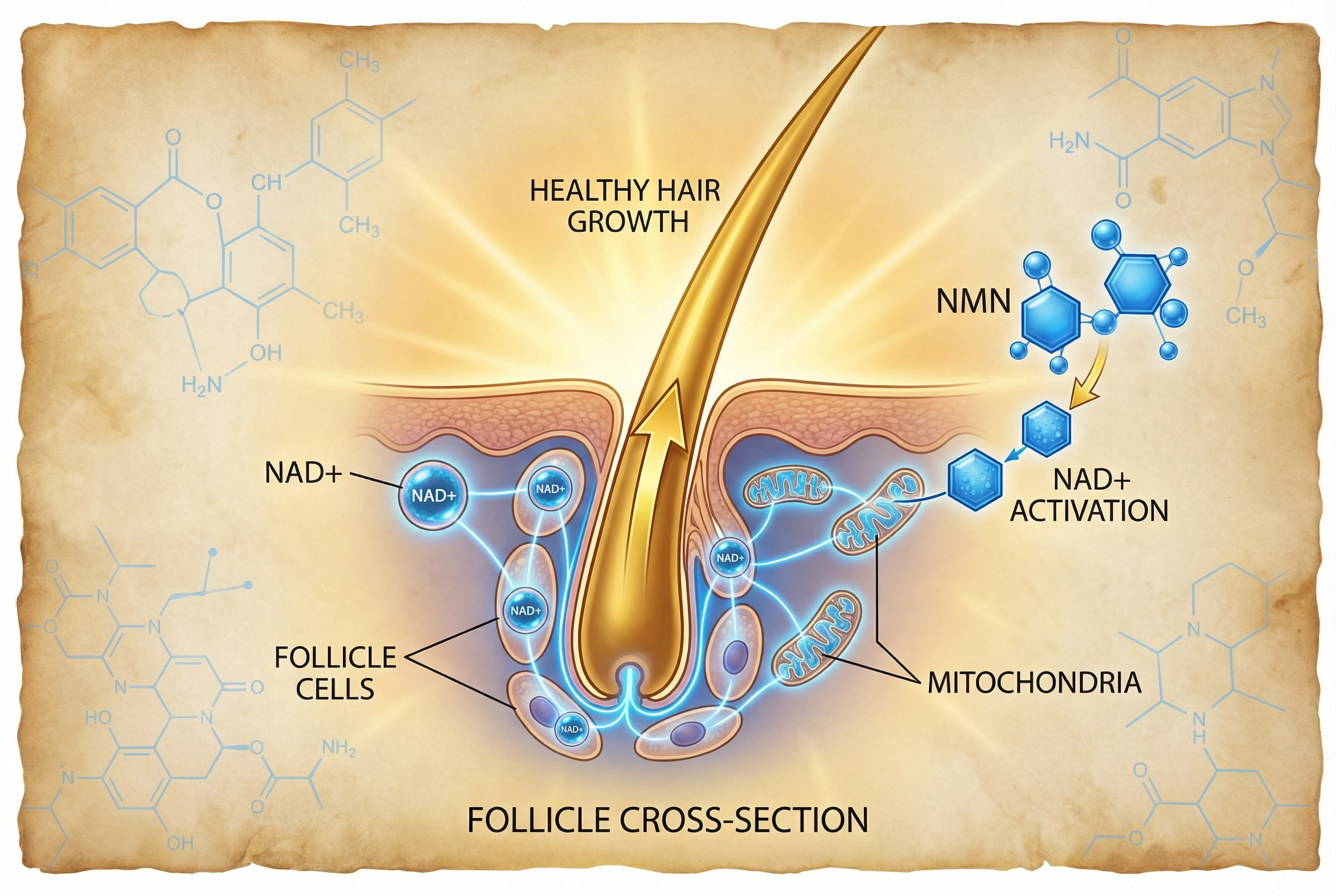
NMN is a precursor to NAD+ (nicotinamide adenine dinucleotide), a coenzyme essential for energy production, DNA repair, and cellular stress responses. As NAD+ levels decline with age—sometimes by as much as 50% by middle age—researchers have wondered whether replenishing this molecule could benefit tissues that depend heavily on cellular energy, including hair follicles.
The most relevant human evidence comes from a small 2024–2025 pilot study published in Cosmetics, funded by Mitsubishi Corporation Life Sciences. In this pre-post intervention study, 15 healthy Japanese women aged approximately 40–50 took 500 mg of oral NMN supplementation daily for 12 weeks. Results showed:
Hair diameter increased from about 75.3 µm to 78.8 µm
Anagen hair elongation density improved by roughly 57%
Terminal hair density increased
Subjective improvements in hair elasticity, gloss, and improved hair volume
However, total hair density actually decreased during the study period—potentially due to seasonal hair loss patterns common in Japanese populations during autumn months.
Complementary evidence from a 2024 mouse study found that topical NMN accelerated hair regrowth after DHT-induced thinning, while cell culture experiments showed NMN protecting dermal papilla cells from oxidative stress and inflammatory factors induced by DHT exposure.
Important caveats: This research is preliminary. The human trial lacked a placebo control, included only 15 participants, and cannot be generalized to pattern baldness or diverse populations. NMN is not an approved treatment for hair loss anywhere in the world.
This article will explore the proposed mechanisms, summarize existing studies, and outline practical strategies that may support maintaining healthy hair alongside any consideration of NMN.
Understanding Hair Loss and the Hair Growth Cycle
Before diving into how NMN might affect hair, it helps to understand what’s actually happening when hair thins or falls out.
Common Hair Loss Patterns
Hair loss manifests differently depending on its cause:
| Type | Who’s Affected | Key Features |
|---|---|---|
| Androgenetic alopecia | Up to 50% of men by age 50; ~40% of women post-menopause | Progressive miniaturization driven by DHT |
| Age-related diffuse thinning | Both sexes with aging | Shortened anagen phase, gradual density loss |
| Telogen effluvium | Anyone after stress, illness, or hormonal shifts | 20-30% of follicles enter resting phase prematurely |
The Hair Growth Cycle
Human hair follows a precise growth cycle with four distinct phases:
Anagen phase – Active growth lasting 2–8 years on the scalp
Catagen – Transition phase where the follicle shrinks (2–3 weeks)
Telogen – Resting phase lasting approximately 3 months
Exogen – Asynchronous shedding of the hair fiber
When this cycle goes awry, problems emerge. DHT (dihydrotestosterone) can shorten the anagen phase, causing terminal hair (≥40 µm diameter) to gradually convert into fine vellus-like hair. This process—called miniaturization—underlies much of androgenetic alopecia.
Scalp Aging
The scalp ages similarly to facial skin. Research suggests 20–40% collagen loss occurs with age, along with elastin fragmentation, thinning dermis, and reduced blood flow to follicles. UV damage compounds these changes, increasing oxidative stress that can further compromise follicular cell functions.
Understanding these processes helps frame why researchers are interested in NAD+-boosting strategies: they target several cellular processes implicated in age-related hair loss.
What Is NMN and How Does It Relate to NAD+ and Aging?
Nicotinamide mononucleotide (NMN) is a precursor of nicotinamide adenine dinucleotide (NAD+), which plays a crucial role in cellular energy metabolism and aging control. NMN (β-nicotinamide mononucleotide) is an intermediate compound in the NAD+ salvage pathway. It occurs naturally in trace amounts in foods like edamame, broccoli, and cucumbers.
Why NAD+ Matters
NAD+ serves as a coenzyme for several cellular processes:
Energy production – Powers mitochondrial ATP synthesis
DNA repair – Activates PARP enzymes that fix damaged DNA
Sirtuin activity – Supports proteins involved in stress response and metabolism
Redox balance – Maintains antioxidant systems
Human data through early 2025 indicates that NAD+ levels decline substantially with age. By around age 50, tissue NAD+ may be roughly 50% lower than youthful levels. Since hair follicles are metabolically demanding mini-organs—requiring ATP surges up to 10-fold higher during anagen than telogen—this decline could theoretically impact hair follicle growth and resilience.
NMN supplementation aims to raise cellular NAD+ levels. Most research has focused on metabolic health, vascular function, and healthy aging rather than hair specifically, but the connection to energy metabolism and cellular repair has made hair an emerging area of interest.
Evidence: NMN and Hair in Human, Animal, and Cell Studies
Hair-focused NMN research accelerated around 2023–2025, spanning three main evidence categories. Here’s what each tells us.
Human Pilot Trial: Oral NMN and Hair Quality in Middle-Aged Women (2024–2025)
The most direct human evidence comes from a study involving 15 middle-aged women in Japan.
Study Design:
Participants: 15 healthy Japanese women (~40–50 years old)
Dose: 500 mg oral NMN daily
Duration: 12 weeks (September–December 2024)
Methods: TrichoScan imaging, scanning electron microscopy (SEM), metabolomic analysis, subjective questionnaires
Key Findings:
Mean hair diameter: 75.3 µm → 78.8 µm (significant increase)
Anagen hair elongation density: 55.9 hairs/cm² → 87.7 hairs/cm² (~57% improvement)
Terminal hair density: 38.6 hairs/cm² → 66.2 hairs/cm² (significant increase)
Total hair density: 190.8 hairs/cm² → 167.9 hairs/cm² (decreased)
The hair count decrease puzzled researchers initially, but they attributed it to seasonal hair shedding patterns well-documented in Japanese populations following summer UV exposure.
Metabolomic analysis of hair samples revealed something interesting: while NMN and NAD+ themselves weren’t detectable in hair, related metabolites like nicotinamide riboside and cystine appeared after supplementation. Energy metabolites including creatine, carnitine, and several amino acids also increased—suggesting enhanced amino acid metabolism and mitochondrial support.
Subjective improvements were reported for:
Hair gloss and hair appearance
Hair elasticity and volume
Gray hair perception
Overall physical fatigue
Hair loss perception during shampooing
Hair cortisol, testosterone, and progesterone levels remained unchanged, suggesting the effects weren’t driven by major hormonal shifts.
Critical Limitations:
No placebo control group
Small, homogeneous sample (healthy Japanese women only)
Short duration with seasonal confounders
Pre-post design prevents establishing causation
Cannot be generalized to men, pattern baldness, or other demographics
Mouse Data: Topical NMN and Regrowth After DHT-Induced Thinning
A 2024 study published in Molecules examined topical NMN in mice with DHT-induced hair thinning—a model mimicking some aspects of androgenetic alopecia.
Key Findings:
Faster return to anagen phase (visible by day 5)
Increased hair length and hair density by day 10
Results comparable to 5% minoxidil in regrowth speed
Reversal of DHT-prolonged telogen and hair sparsity induced by the hormone
No cytotoxicity at tested concentrations
These previous animal study results are encouraging but come with important caveats. Mouse hair growth cycles last only 3–4 weeks compared to years in humans. Mice also have different DHT sensitivity and 5α-reductase activity. The topical concentrations used may not translate directly to safe or effective human products.
Cell Studies: NMN, Dermal Papilla Cells, and Oxidative Stress
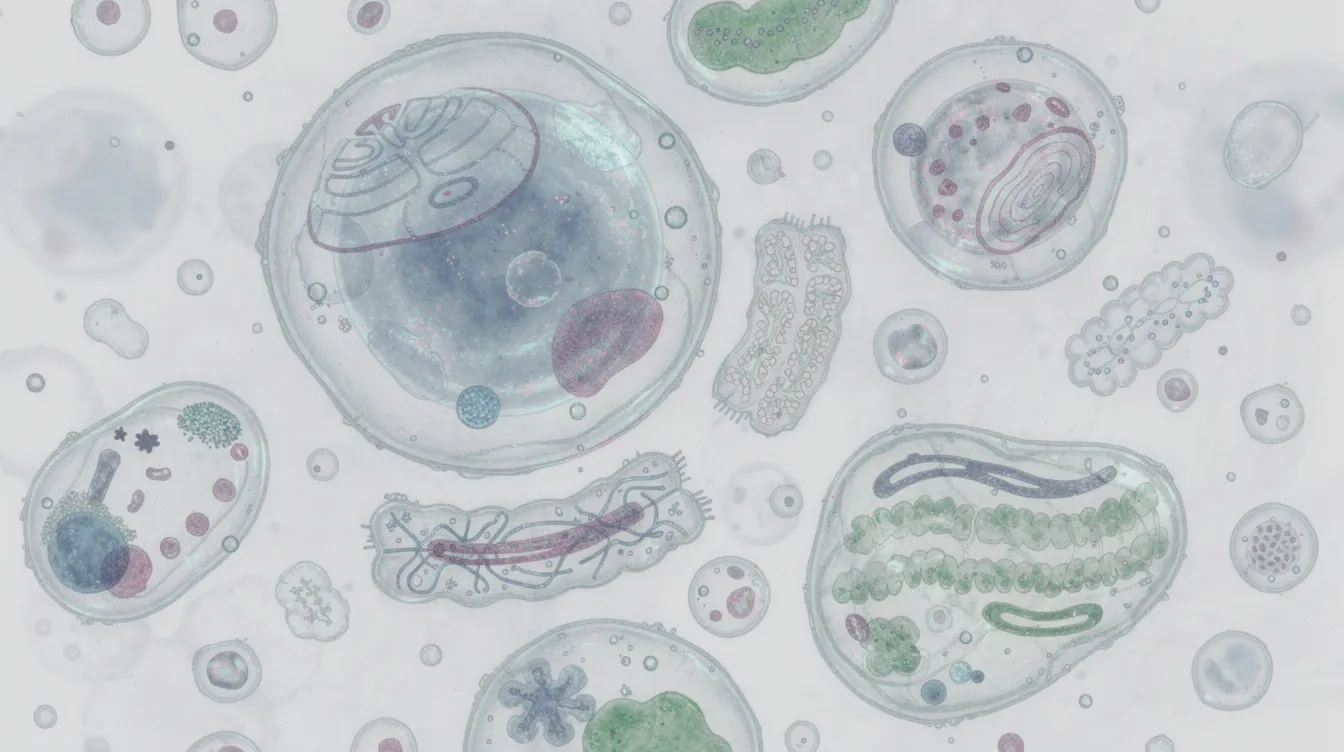
In vitro experiments on human dermal papilla cells—the regulatory cells at the base of hair follicles—provide mechanistic insights.
Key Findings:
Restored cell proliferation (previously reduced 30–50% by DHT)
40–60% reduction in pro-inflammatory cytokines (IL-6, IL-1β, TNF-α)
Inhibited NF-κB p65 nuclear translocation
Increased VEGF expression (1.5–2 fold) supporting blood flow
Increased β-catenin expression (promoting anagen entry)
Reduced androgen receptor and DKK-1 expression
These shifts suggest NMN could help maintain a growth-permissive environment for hair follicles under stress. However, cell studies are early-stage research—they help identify mechanisms but don’t prove oral or topical NMN will produce identical effects in living cells within an intact human scalp.
How Might NMN Support Hair and Scalp Health Mechanistically?
Researchers are exploring several plausible pathways through which NMN, via NAD+ elevation, might influence hair follicles. These mechanisms remain theoretical for hair applications specifically.
Enhancing Mitochondrial Function
Hair follicles demand enormous energy during the anagen phase—ATP requirements can surge 10-fold compared to resting states.
Mitochondrial dysfunction associated with aging may slow this energy production, potentially contributing to hair follicle atrophy and miniaturization.
Research suggests NMN-induced NAD+ increases could support more efficient ATP production through the electron transport chain, helping follicular cells maintain the energy output needed for robust growth.
Reducing Oxidative Stress
Reactive oxygen species (ROS) accumulate with age, UV exposure, and environmental pollution.
Studies show ROS levels are approximately 2–3 times higher in balding scalps compared to non-affected areas.
Excessive oxidative stress can damage follicular DNA, proteins, and lipids, potentially shortening anagen and accelerating the hair aging process.
NAD+-dependent enzymes involved in redox balance and antioxidant recycling may function better with adequate NAD+ levels.
Modulating Inflammation
Chronic low-grade inflammation around follicles appears in some forms of hair thinning.
The NF-κB signaling pathway and cytokines like IL-6 and TNF-α can disrupt normal hair growth cycles.
Cell data suggest NMN might dampen some of these inflammatory pathways in dermal papilla cells, potentially creating enhanced scalp conditions for follicle activity.
Supporting Growth Signaling
The Wnt/β-catenin pathway and VEGF are critical for:
Anagen entry and prolongation
Vascularization around follicles
Promoting hair growth from stem cells
Experimental data show NMN can upregulate these factors under DHT challenge in cell and mouse models, potentially helping enhance follicle maturation and cycling.
Hormone Interactions
DHT remains a central driver of androgenetic alopecia.
While preclinical work suggests NMN might reduce androgen receptor and DKK-1 expression, there’s no clinical evidence that NMN can replace or match DHT-targeting therapies like finasteride, which reduces scalp DHT by 60–70%.
NMN’s role appears to be more about supporting cellular resilience than blocking hormonal pathways directly.
Choosing the Right NMN Supplement
Selecting the right NMN supplement is crucial if you’re aiming to support hair growth, boost anagen hair elongation density, and improve hair diameter. With the growing popularity of NMN for promoting hair growth and overall wellness, the supplement market has become crowded—making it important to choose wisely for both safety and effectiveness.
Here’s what to look for when choosing an NMN supplement:
Purity and Quality: Opt for NMN supplements that are at least 99% pure. High purity ensures you’re getting the active ingredient needed to potentially support anagen hair elongation and thicker hair shafts, without unnecessary fillers or contaminants.
Third-Party Testing: Reliable brands provide certificates of analysis (COA) from independent labs. This testing verifies the NMN content and checks for heavy metals, microbes, and other impurities—helping you avoid products that could undermine your hair health goals.
Formulation and Bioavailability: NMN supplements come in capsules, powders, and sublingual forms. Some evidence suggests sublingual or powder forms may offer better absorption, which could be important for maximizing the benefits related to hair follicle growth and anagen hair elongation density.
Transparent Labeling: Look for clear labeling that lists NMN content per serving, recommended dosage, and any additional ingredients. Avoid products with proprietary blends that don’t specify exact amounts.
Reputable Brands: Choose brands with a track record of quality and positive reviews, ideally those that participate in ongoing research or are transparent about their sourcing and manufacturing processes.
Limitations, Open Questions, and Safety Considerations
The clinical evidence for NMN specifically targeting hair loss is preliminary at best. One small, uncontrolled human trial plus animal and cell data don’t constitute proof of efficacy.
Key Scientific Uncertainties
| Question | Current Status |
|---|---|
| Does NMN help with hair thickness vs. actual regrowth? | Thickness improvements seen; hair regeneration effects unclear |
| Are effects sustained after stopping? | Unknown; NAD+ half-life is days to weeks |
| Optimal dose, form, duration? | 500mg oral showed some effects; topical unstudied in humans |
| How do genetics, sex, age modify response? | Only healthy women tested; men and pattern baldness excluded |
Study Design Gaps
Future research needs:
Randomized, placebo-controlled, double-blind trials
Duration of 6–12+ months minimum
Larger, diverse populations (men, postmenopausal women, various ethnicities)
Objective endpoints: standardized photography, hair count, hair condition assessments
Safety Profile
Published NMN studies for metabolic and vascular endpoints using doses of 250–900 mg/day over weeks to months have generally reported:
Good short-term tolerability
Mild GI upset in <10% of participants
No serious adverse events
However, long-term safety data beyond 2 years doesn’t exist. Unknowns remain for younger individuals, those with cancer-prone conditions (since NAD+ fuels cell proliferation), or potential interactions with minoxidil, finasteride, or hormone treatments.
Regulatory Context
NMN’s regulatory status varies by country. The FDA banned NMN as a dietary supplement in 2022 (though enforcement remains inconsistent), while it has GRAS status for food use in Japan and the EU. It’s not approved as a hair loss treatment anywhere.
Publication bias is also worth considering—many NMN studies receive supplement industry funding, and negative results may be underreported.
Practical Ways to Support Hair Health (With or Without NMN)
Whether or not you decide to explore an NMN supplement, evidence-based strategies can support your hair care goals.
Nutritional Foundations
| Nutrient | Role | Sources/Notes |
|---|---|---|
| Protein | Keratin synthesis | 1.2–1.6 g/kg body weight |
| Zinc | Follicle enzyme cofactor | 15–30 mg; deficient in ~20% of AGA cases |
| Vitamin D | Receptor activity in papilla | Target >30 ng/ml blood levels |
| Iron | Oxygen delivery to follicles | Test levels if experiencing hair shedding |
| Omega-3s | Reduce inflammatory prostaglandins | Fatty fish, walnuts, flax |
Scalp Care Practices
Gentle cleansing to avoid chronic irritation
Sun protection via hats or mineral sunscreens on exposed scalp
Avoiding frequent harsh heat styling
Limiting tight hairstyles causing traction (hair removal via pulling)
Regular scalp massage may boost perfusion by 10–20%
Evidence-Based Medical Options
For common forms of hair loss, proven treatments include:
Topical minoxidil – Over-the-counter; 40–60% response rate
Finasteride/dutasteride – Prescription DHT blockers; 65–90% stabilization rates
Low-level laser therapy – Photobiomodulation; ~20–25 hairs/cm² increase in studies
PRP (platelet-rich plasma) – 30–50% density gains in meta-analyses
Hair transplantation – Surgical option under specialist guidance
Where NMN Fits
Some individuals are experimenting with oral NMN—and in research settings, topical formulations—not as a replacement for proven therapies but as an adjunct potentially improving overall follicular resilience and thickening existing hair.
If considering NMN, discuss your situation with a healthcare professional. Factor in your specific type of hair loss, current medications, and realistic expectations based on the limited evidence for nmn promoting hair growth.

Summary and Future Directions for NMN in Hair Regrowth Research
NMN is a NAD+ precursor with biologically plausible pathways for supporting existing terminal hairs and overall hair health—via mitochondrial support, reduced oxidative stress, and modulation of inflammatory and growth signals.
The 12-week pilot study in middle-aged women found thicker hair shafts, better anagen hair elongation, and improved hair quality scores, though with a significant decrease in total hair count (attributed to seasonal factors) and notable design limitations. Mouse and cell studies under DHT and oxidative stress show promising responses in reversing hair sparsity, yet translation to human hair regrowth remains unproven.
What’s Needed Next
Larger, longer, rigorously controlled trials (both oral and topical NMN)
Testing in men, people with established pattern baldness, and diverse populations
Mechanistic human studies with follicle biopsies and scalp metabolomics
Comparisons between NMN and other NAD+ precursors like NR
Independent funding sources to reduce bias
The Bottom Line
Think of NMN as an intriguing, evolving area of hair-aging research rather than a guaranteed solution for hair parting concerns or significant hair loss. The science of enhancing mitochondrial function and reducing oxidative stress for improved cuticle conditions and hair length is compelling, but we’re still in early chapters of this story.
If you’re concerned about age related hair loss, start with proven strategies and discuss emerging approaches like NMN with a dermatologist or hair-loss specialist. They can help you weigh the current evidence against your personal situation, existing hair treatments, and health history.
The connection between NAD+, cellular energy, and hair aging is a space worth watching—just with realistic expectations about where the research currently stands.
Further Reading
Explore more articles related to this topic:
- NMN for Skin Aging: Can Boosting NAD+ Actually Reduce Wrinkles and Improve Elasticity?
- NMN for Women: Benefits for Fertility, Hormones, and Menopause
- Health Benefits of NMN: What Science Really Shows
- NMN for Men Over 50: A Science-Backed Guide to Testosterone, Muscle, and Energy
- NMN Side Effects Exposed: What the Science Says About Long-Term Use