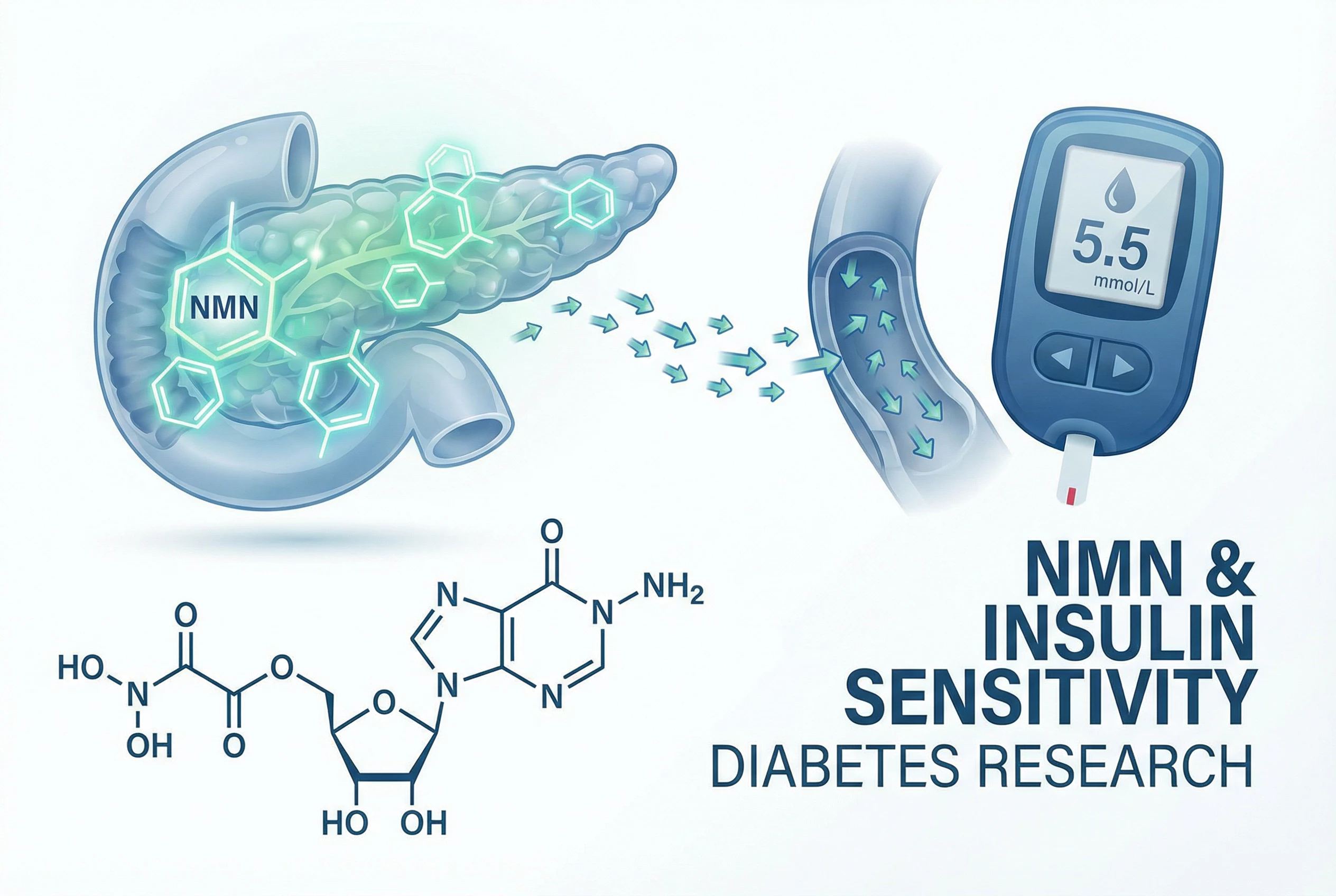

Nicotinamide mononucleotide (NMN) has gained attention as a potential tool for metabolic health, with some researchers investigating whether it could help people with type 2 diabetes. NMN is a precursor to key NAD+, a crucial metabolite involved in cellular energy production, metabolic health, and the regulation of enzymes like sirtuins. NAD+ metabolism, often discussed in the context of ‘cell metab’, plays a central role in cellular metabolic processes, energy production, and insulin sensitivity.
This article is intended for people with type 2 diabetes, those at risk, and anyone interested in the science behind NMN supplementation.
As we age, metabolic health naturally declines, increasing the risk of age induced diabetes due to impaired metabolic pathways and insulin resistance. Animal research has shown that NMN can help reverse diet- and age-induced diabetes in mice by normalizing glucose metabolism and improving insulin action.
But does the science support the hype? This article breaks down what we actually know from human and animal research, addresses safety questions, and offers practical guidance for anyone considering this supplement.
Quick Answer: What Do We Actually Know So Far?
NMN reliably raises NAD+ levels in blood, but current human data on type 2 diabetes and insulin sensitivity are limited and mixed. One small 2021 trial found improved muscle insulin sensitivity in prediabetic women, but broader analyses have not confirmed consistent benefits for glucose control. A clinical trial also showed that NMN supplementation improved insulin sensitivity in postmenopausal women with prediabetes.
Here’s what the evidence tells us:
The Yoshino et al. trial (Science, 2021): A 10-week randomized, placebo controlled study of 250 mg/day oral NMN in 25 postmenopausal women with prediabetes found improved insulin-stimulated glucose disposal in skeletal muscle—but did not lower fasting glucose or HbA1c.
Taking 250 mg of oral NMN daily for about three months conferred a fivefold elevation in blood serum insulin levels, with the initial average blood insulin concentration increasing from 6.95 µIU/mL to 39.2 µIU/mL after two months.
2024 systematic review and meta-analysis: Pooling data from 8 randomized controlled trials (through May 31, 2023, approximately 342 adults), researchers found no significant effects of NMN on fasting glucose, fasting insulin, HbA1c, HOMA-IR, or lipid markers in mostly non-diabetic or healthy adults.
NAD+ does increase: The meta-analysis confirmed NMN supplementation significantly elevated blood NAD+ concentrations (standardized mean difference 1.79), but this biochemical change did not translate to measurable improvements in diabetes markers.
Critical gap: No large-scale RCTs exist in people already taking diabetes medications like metformin or insulin.
NMN supplementation has also been shown to increase blood serum insulin levels after meals, resulting in more insulin available to help the body use glucose for energy.
There is not enough high-quality evidence to recommend NMN as a treatment for type 2 diabetes. It should not replace established medical care.
This article will unpack how NMN works, what animal and human data show, safety questions that remain open, and practical discussion points patients can raise with their clinicians.
What Is NMN and Why Is It Linked to Diabetes and Insulin Resistance?
Nicotinamide mononucleotide (NMN) is a precursor of nicotinamide adenine dinucleotide (NAD+), which is essential for various biological processes including energy metabolism.
Understanding NMN requires starting with its role in human metabolism. Here’s what you need to know:
NMN defined: Nicotinamide mononucleotide NMN is a direct precursor to nicotinamide adenine dinucleotide NAD, a coenzyme central to energy metabolism, mitochondrial function, and cellular repair in mammalian cells.
NAD+ and energy: NAD+ participates in glycolysis (converting glucose to energy), the TCA cycle (generating reducing equivalents), and oxidative phosphorylation in mitochondria for ATP production. Without adequate NAD+, cells struggle to process glucose efficiently.
The aging connection: NAD+ levels decline with aging and in metabolic disorders. This decline has been associated with impaired sirtuin activity (particularly SIRT1), reduced mitochondrial biogenesis, and diminished AMPK activation—all of which contribute to insulin resistance in tissues.
Dietary sources: NMN is found in small amounts in foods such as broccoli (0.25-1.1 mg/100g), edamame (0.47-1.88 mg/100g), avocado, cucumber, and cabbage. NMN is naturally found in small amounts in foods like edamame, broccoli, cucumber, and avocado. However, these trace amounts are dwarfed by supplemental doses.
Supplement forms: Most commercial NMN products are oral capsules or powders with common doses ranging from 125-1000 mg/day. NMN administration at these levels remains under research and is not approved as a diabetes drug.
Animal research origins: Many mouse studies between 2011-2020 showed NMN improving insulin sensitivity and glucose tolerance in high fat diet models, which sparked interest in diabetes applications for humans. Key researchers in this field include mills kf, who has contributed significantly to our understanding of NAD+ metabolism and NMN supplementation, and uddin gm, whose work has advanced knowledge of NMN’s effects on metabolic health and NAD+ pathways.
How Might NMN Influence Insulin Sensitivity? (Mechanisms in Muscle, Fat, and Liver)
Mechanistic insights come mainly from animal and cellular experiments, with humans studied to a much lesser extent. These mechanisms remain hypotheses rather than proven clinical pathways.
Skeletal Muscle
The effects of NMN on muscle function have received significant attention:
Increased NAD+ in skeletal muscle may enhance insulin signaling cascades, including improved phosphorylation of insulin receptor substrate and AKT
NMN treatment in mice showed enhanced glucose transporter (GLUT4) translocation, facilitating glucose uptake into cells
The Yoshino 2021 trial observed upregulated insulin signaling proteins and improved muscle insulin sensitivity in study participants
Some mouse studies noted that while certain glycolytic enzymes were downregulated, overall glucose handling improved
Adipose Tissue
Research in mice fed a high fat diet revealed interesting changes in fat tissue:
NMN promoted adipose tissue growth via upregulated protein synthesis/degradation pathways
mTOR signaling activation supported cellular proliferation
Thermogenic proteins like UCP1 were upregulated, potentially enhancing glucose disposal and energy expenditure
Proteomic data identified increased ribosomal proteins and proteasome components
Liver
Hepatic effects observed in rodent models include:
Improved insulin signaling and reduced fat accumulation (steatosis)
Upregulated oxidative phosphorylation and lysosomal pathways
Changes in mitochondrial function that may support better glucose handling
These liver effects have not been confirmed in patients with type 2 diabetes
Brain Metabolism
Some intriguing findings emerged regarding central metabolic adaptation:
NMN-treated mice showed upregulated ketogenesis (higher HMGCS2)
Downregulated OXPHOS/TCA components mimicked fasting states
This “fasting-like” brain rewiring raises questions about systemic glucose lowering via central mechanisms
Important caveat: In humans, oral NMN supplementation results in partial conversion to nicotinamide in the gut and liver before reaching other tissues. This may limit the direct translation of findings from injected or higher-dose animal experiments to human outcomes.

Metabolic Health Benefits of NMN Beyond Insulin Sensitivity
While much of the spotlight on NMN supplementation has focused on its effects on insulin sensitivity, research suggests that its metabolic health benefits extend even further. By boosting levels of nicotinamide adenine dinucleotide (NAD+), NMN plays a central role in supporting healthy energy metabolism across multiple tissues. This is particularly important as NAD+ is essential for the function of enzymes involved in cellular repair, mitochondrial health, and overall metabolic balance.
One of the standout benefits observed in both animal and early human studies is NMN’s ability to enhance muscle function and reduce muscle insulin resistance. For example, in prediabetic women, NMN treatment has been linked to improved muscle insulin sensitivity, which is crucial for efficient glucose uptake and utilization. This effect not only supports better blood sugar control but also contributes to maintaining muscle health as we age.
Beyond muscle, NMN supplementation appears to positively influence adipose tissue. Research indicates that NMN can promote healthy growth and improve glucose uptake in fat cells, potentially aiding in weight management and reducing the risk of metabolic complications. These changes in adipose tissue may also help counteract some of the negative effects associated with obesity and age-related disorders.
Additionally, by increasing NAD+ levels, NMN supports the body’s natural defenses against cellular aging and metabolic decline. This has led to growing interest in NMN as a potential intervention for preventing or delaying age-related disorders, including those linked to diabetes and insulin resistance.
Overall, while more research is needed, the effects of NMN on energy metabolism, muscle function, and adipose tissue highlight its promise as a tool for improving metabolic health—not just for those at risk of diabetes, but potentially for the broader population seeking to maintain vitality as they age.
What Have Human Studies Found About NMN and Insulin Sensitivity?
The contrast between promising animal data and more modest human results is striking. Here’s what clinical trials have actually demonstrated:
The Landmark Yoshino Trial
This 10-week randomized, placebo controlled trial (published in Science, 2021) remains the most cited evidence:
| Parameter | Finding |
|---|---|
| Population | 25 prediabetic women (postmenopausal, ages 55-79) |
| Dose | 250 mg/day oral NMN |
| Duration | 10 weeks |
| Primary outcome | Improved insulin-stimulated glucose uptake in skeletal muscle |
| Mechanism | Enhanced insulin signaling (p-AKT, GLUT4 translocation) |
| No change | Fasting glucose, HbA1c, blood pressure, hepatic fat |
| The trial by Yoshino J and colleagues provides the strongest direct evidence for insulin sensitivity improvements in at-risk humans, though the specificity to prediabetic women limits generalizability. |
Other Small Trials (2021-2023)
Several Japanese and Chinese NMN trials in healthy subjects or mildly overweight adults found:
Consistent increases in blood NAD+ levels
Little to no change in fasting glucose or fasting insulin
No significant improvements in HOMA-IR
No meaningful changes in lipid panels
Doses ranged from 250-2000 mg/day for 2-12 weeks, with healthy adults comprising most participants.
The 2024 Meta-Analysis
The systematic review pooling 8 RCTs (sample sizes 14-108, total approximately 342 adults) concluded:
Fasting glucose: Mean difference -0.04 mmol/L (p=0.403)—not significant
HOMA-IR: Mean difference 0.10 (p=0.444)—not significant
HbA1c: Mean difference 0.00% (p=0.962)—no effect
Lipids: No significant changes in triglycerides, total cholesterol, LDL-C, or HDL-C
A small, non-robust trend toward reduced HOMA-IR disappeared in sensitivity analyses. The meta-analysis also flagged bias concerns (some concerns in 7 studies, high risk in 5).
Almost all these trials focused on non-diabetic or prediabetic adults. Direct evidence in people with established type 2 diabetes is essentially lacking.
NMN for Type 2 Diabetes: Current Evidence, Open Questions, and Cautions
As of early-mid 2020s, there are no large, long-term randomized trials showing that NMN improves hard diabetes outcomes such as HbA1c reduction, complication rates, or need for glucose-lowering medications.
Why Results May Appear Limited
Near-normal baselines: Healthy or mildly at-risk populations often start with near-normal glucose and lipid levels, leaving little room for measurable improvement despite increased NAD+
Short durations: Most trials lasted only 2-12 weeks—insufficient time for meaningful changes in HbA1c or other chronic markers
Small sample sizes: Studies with 14-108 participants lack statistical power to detect modest effects
Key Research Gaps
| Gap | Why It Matters |
|---|---|
| No RCTs in medicated T2D patients | Cannot assess interactions with metformin, SGLT2i, GLP-1 agonists, or insulin |
| Limited long-term data | Effects beyond 3 months unknown |
| Dose uncertainty | Human studies used 4-33 mg/kg/day; effective mouse doses reached 100-300 mg/kg/day |
| Sex differences | Female mice show greater improvements than males; human sex-stratified research is sparse |
| Demographic variations | Response differences in lean vs obese, younger vs older, or fatty liver patients remain under further investigation |
A Clear Boundary
NMN should not be used as a substitute for evidence-based type 2 diabetes treatments:
Metformin
SGLT2 inhibitors
GLP-1 receptor agonists
Insulin (when indicated)
Lifestyle interventions (diet, exercise, weight loss)
Any supplement use should be discussed with a healthcare professional who can help monitor effects on blood glucose and adjust medications if needed.

Safety, Side Effects, and Regulatory Status of NMN
Short-term human trials provide some reassurance, but important questions remain open.
What Trials Have Shown
Generally well-tolerated: Studies up to 12 weeks with doses of 250-2000 mg/day reported no serious adverse events
Stable markers: No consistent changes in liver enzymes, BMI, or blood pressure observed
Mild effects at higher doses: Some studies noted slightly more digestive discomfort, nausea, or headaches at doses ≥1000 mg/day, though clinical significance remains unclear
Theoretical Concerns Under Investigation
Nicotinamide overload: Chronic high-dose NAD+ precursor use could theoretically cause accumulation effects
Cardiovascular questions: Some researchers have raised hypothetical links requiring further investigation
Cell proliferation: NAD+ supports cellular metabolism broadly, including in fast-growing cells—though direct cancer-related evidence in humans is lacking
Drug interactions: Any compound altering insulin sensitivity could theoretically influence blood sugar patterns or hypoglycemia risk when combined with diabetes medications
Regulatory Status
NMN’s statutory regulation varies by region:
In many countries, it’s sold as a dietary supplement or novel ingredient—not as an approved drug
Quality standards and oversight vary between manufacturers
No regulatory body has approved NMN for diabetes treatment
What to ask your doctor about NMN:
Is this appropriate given my current medications?
How should we monitor my blood glucose if I try it?
What signs should prompt stopping?
Are there quality considerations for choosing a product?
Note that NR supplementation (nicotinamide riboside, a related NAD+ precursor) has also been studied with similar patterns of NAD+ elevation but inconsistent metabolic benefits.
Practical Tips: Evidence-Based Ways to Improve Insulin Sensitivity (With or Without NMN)
The strongest, most reproducible improvements in insulin sensitivity for type 2 diabetes still come from lifestyle changes and standard medical therapies—not from experimental supplements. Here’s your actionable toolkit:
Physical Activity
Regular exercise remains a cornerstone of metabolic health:
Target: At least 150 minutes per week of moderate-intensity aerobic exercise (brisk walking, cycling, swimming)
Add resistance training: 2+ sessions per week to improve muscle function and glucose uptake
Consistency matters: Even 10-minute walking sessions after meals can reduce glucose spikes
Physical performance benefits: Regular activity improves both insulin sensitivity and overall fitness
Dietary Patterns
Focus on patterns rather than single foods:
Mediterranean-style diets: Meta-analyses show 20-30% improvements in HOMA-IR
Emphasize: Whole grains, legumes, non-starchy vegetables, healthy fats (olive oil, nuts)
Minimize: Ultra-processed foods, sugary drinks, refined carbohydrates
Practical approach: Small, sustainable changes beat dramatic overhauls
Sleep and Stress
Often overlooked but meaningful factors:
Sleep: Aim for 7-9 hours per night; poor sleep directly impairs insulin sensitivity
Stress management: Mindfulness, cognitive-behavioral strategies, and relaxation training all support better glucose regulation
The connection: Chronic stress elevates cortisol, which antagonizes insulin action
Monitoring with Your Healthcare Team
Track key markers regularly:
Fasting glucose and HbA1c
Lipid profile
Blood pressure
Body weight and waist circumference
These help assess whether lifestyle and medication changes are delivering beneficial effects on insulin sensitivity.

If You’re Considering NMN
For those curious about this NMN supplement category:
View it as a possible adjunct to—not a replacement for—validated strategies
Document any changes in blood glucose with professional guidance
Choose products from reputable manufacturers given variable quality in the supplement market
Recognize that therapeutic potential remains unproven in established diabetes
The general population with type 2 diabetes will benefit most from proven interventions while research on age related disorders and NAD+ precursors continues to evolve.
Key Takeaways
NMN reliably raises NAD+ levels but has not consistently improved glucose control or insulin resistance markers in human trials
The best evidence comes from one small trial in prediabetic women showing improved muscle insulin sensitivity
No studies have tested NMN in people with established type 2 diabetes taking medications
Safety appears acceptable short-term, but long-term effects need further investigation
Evidence-based lifestyle changes (exercise, diet, sleep, stress management) remain the foundation for improving insulin sensitivity
If NMN interests you, bring this conversation to your next medical appointment rather than self-treating
The most reliable path to better insulin sensitivity still runs through daily habits—not capsules. Stay curious about emerging research, but let proven strategies do the heavy lifting while the science catches up.
Conclusion: What’s the Real Promise of NMN for Type 2 Diabetes?
The real promise of NMN for type 2 diabetes lies in its potential to enhance muscle insulin sensitivity and support overall metabolic health. Early research, particularly in prediabetic women, suggests that NMN supplementation can improve how muscles respond to insulin, which is a key factor in maintaining healthy blood sugar levels. By boosting NAD+ and supporting energy metabolism, NMN may also help counteract some of the metabolic slowdowns that come with aging and age-related disorders.
However, it’s important to recognize that while these findings are encouraging, the evidence is still emerging. Larger, longer-term studies are needed to fully understand the effects of NMN supplementation on human metabolism, its safety profile, and its role as a therapeutic intervention for type 2 diabetes. At this stage, NMN should be viewed as a potential adjunct to—not a replacement for—proven diabetes treatments and lifestyle strategies.
For those interested in exploring NMN, the best approach is to do so under the guidance of a healthcare professional, especially given the need for further investigation into its long-term effects and interactions with other diabetes therapies. As research continues, NMN may become an increasingly valuable tool in the prevention and management of diabetes and other metabolic disorders, particularly for improving muscle insulin sensitivity and supporting healthy aging.
In summary, NMN supplementation offers intriguing possibilities for enhancing insulin sensitivity, energy metabolism, and metabolic health. While the journey from promising research to established therapy is ongoing, staying informed and focusing on evidence-based practices remains the best strategy for managing diabetes and supporting overall well-being.
Further Reading
Explore more articles related to this topic:
- NMN vs Metformin: Which Is Better for Blood Sugar and Longevity?
- NMN for Weight Loss 2026: Does Boosting NAD+ Actually Burn Fat?
- NMN and Gut Health: How NAD+ Affects Your Microbiome and Digestive Wellness
- Health Benefits of NMN: What Science Really Shows
- NMN and Intermittent Fasting: Should You Take Your Supplement During the Fast?