
The world of sports nutrition is constantly evolving, and nicotinamide mononucleotide NMN has emerged as one of the most discussed compounds among athletes and fitness enthusiasts. But can this cellular energy booster actually replace the pre-workout supplements you’ve relied on for years? Let’s dig into the research and find out what NMN really offers.
Quick Answer: Can NMN Really Replace Your Pre-Workout?
The short answer is no—NMN is not a direct replacement for stimulant-heavy pre-workouts, but it may support endurance and muscle recovery over time through different cellular mechanisms.
If you’re expecting the immediate rush of caffeine, the tingling sensation of beta-alanine, or the pump from citrulline, NMN won’t deliver those effects. Instead, NMN supplementation works at the cellular level, influencing how your cells produce and manage energy over weeks and months of consistent use.
Most of what we know about NMN and exercise performance comes from small human trials conducted between 2020 and 2022, along with earlier animal studies. The results are promising but not definitive. Effects vary significantly between individuals, and we’re still in the early stages of understanding how NMN impacts athletic performance across different populations.
Think of NMN as a longer-term support nutrient rather than a single-dose performance enhancer. It’s designed to optimize cellular energy production and recovery processes gradually—not to replace the acute boost you get from a scoop of your favorite pre-workout.
Disclaimer: This article is purely informational and does not constitute medical advice. Before starting any new supplement, including NMN, consult with a healthcare professional to discuss whether it’s appropriate for your individual circumstances.
In the sections ahead, we’ll explore how NMN supports endurance and examine what research says about recovery.
What Is NMN and How Does It Work in the Body?
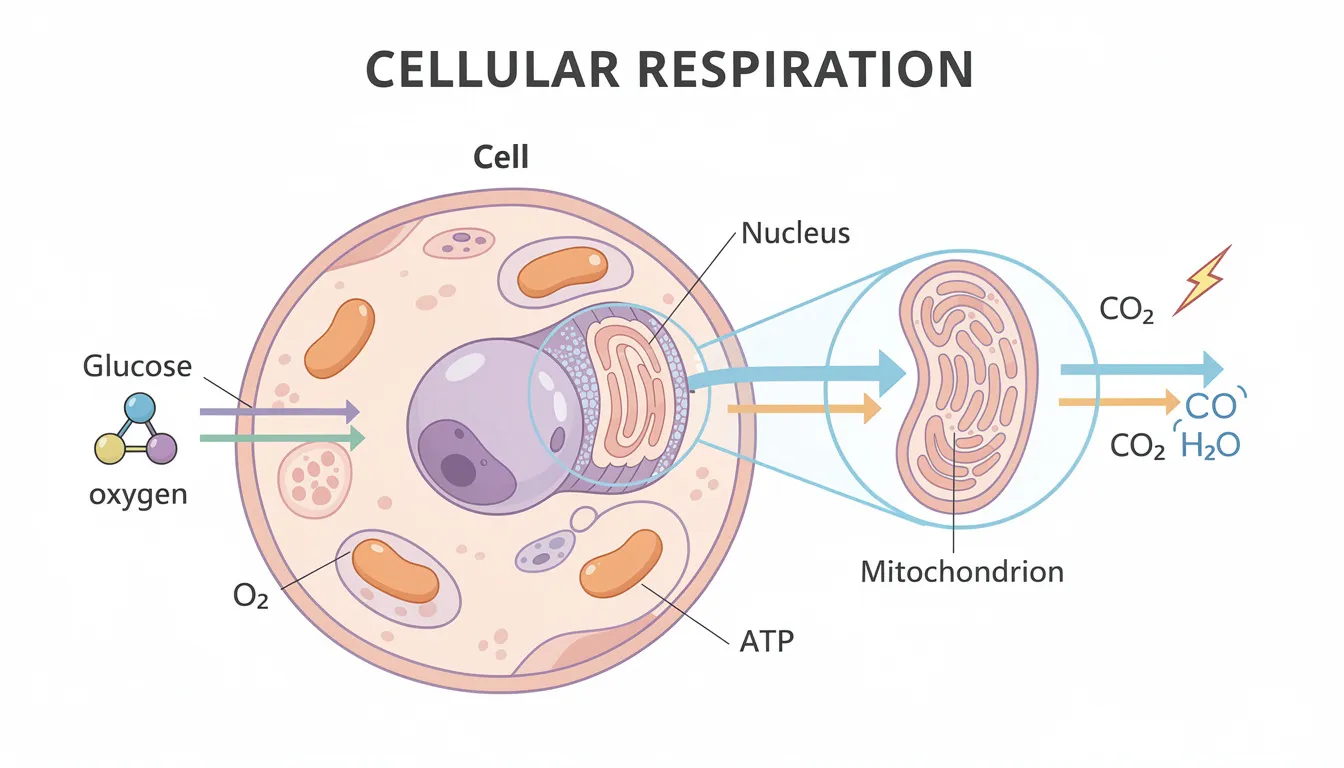
Nicotinamide mononucleotide is a compound derived from vitamin B3 and serves as a direct precursor to nicotinamide adenine dinucleotide (NAD+). This coenzyme essential for life participates in hundreds of metabolic reactions throughout your body, including those that generate ATP—the primary energy currency your muscles use during exercise.
NMN is a precursor to NAD+, a coenzyme involved in over 50% of physiological processes in the body.
NAD+ plays a critical role in mitochondrial function, the powerhouse process that converts nutrients into usable cellular energy. NAD⁺ is involved in over 50% of physiological processes in the body, including energy metabolism and DNA repair. When your mitochondrial efficiency is high, your cells can produce energy more effectively, supporting everything from muscle contraction to DNA repair.
Here’s the challenge: NAD levels tend to decline with age and chronic stress. NAD+ levels naturally decline with age, leading to reduced mitochondrial function and diminished physical endurance. Research dating back to the early 2000s has documented this decline in both human and animal studies. As NAD⁺ levels decline with age, mitochondrial function decreases, leading to reduced energy output and increased susceptibility to fatigue. As NAD+ drops, so does your capacity for cellular energy NMN aims to restore.
Reduced NAD+ and mitochondrial dysfunction are linked to age-related conditions such as heart disease, highlighting the broader health implications of maintaining optimal NAD+ levels.
Why take NMN rather than NAD+ directly? Studies suggest that NMN offers better stability and bioavailability when taken orally. It converts to NAD+ once inside your cells, making it a practical way to boost these crucial levels.
You may have also heard of nicotinamide riboside (NR), another NAD+ precursor. Both compounds aim to raise NAD+, but they enter the biosynthesis pathway at slightly different points. Current research positions NMN one step closer to NAD+ in the conversion process, though both remain active areas of investigation.
NMN supplements are currently sold as dietary supplements in many regions, though regulatory discussions continue in the US and elsewhere. This status may evolve as more research emerges.
How NMN May Support Endurance and Aerobic Capacity
When we talk about endurance, we’re referring to your ability to sustain effort—running, cycling, rowing, or any prolonged physical activity—without hitting the wall prematurely. This is where NMN offers some intriguing possibilities.
The Proposed Mechanism
The theory works like this:
NMN raises circulating NAD+ in your bloodstream and tissues
NAD+ participates directly in mitochondrial respiration
Enhanced mitochondrial function may improve oxygen utilization and energy output during extended efforts
Better oxygen delivery to skeletal muscle means you can work harder before fatigue sets in
This cascade of effects, centered on supporting mitochondrial function, could translate to improved endurance for athletes who depend on sustained aerobic capacity.
Key Human Research
The most frequently cited study comes from a 2021 randomized, double blind study published in the Journal of the International Society of Sports Nutrition. Researchers recruited 48 amateur runners—middle-aged recreational athletes training five to six times per week—and followed them over six weeks. Endurance capacity was measured using a stationary bike (cycloergometer) to assess aerobic performance.
Participants were divided into four groups receiving either:
300 mg NMN daily
600 mg NMN daily
1200 mg NMN daily
Placebo
The results showed that the medium (600 mg) and high (1200 mg) NMN groups experienced significant improvements in several endurance markers:
| Metric | Change in NMN Groups |
|---|---|
| Power at VT1 | Increased (dose-dependent) |
| Power at VT2 | Increased (dose-dependent) |
| VO₂ at ventilatory threshold | Improved |
| %VO₂max at VT2 | Improved |
| Peak VO₂max | No significant change |
| Studies show NMN improves the ventilatory threshold in amateur runners, allowing for more efficient oxygen utilization during exercise. |
Importantly, the benefits appeared dose-dependent—higher doses of NMN produced greater endurance improvements. However, absolute VO₂max (your ceiling of aerobic capacity) did not change significantly in any group.
NMN supplementation has been shown to enhance aerobic capacity in amateur runners. A recent study found that NMN supplementation improved endurance capacity by enhancing oxygen delivery in muscle tissue.
What This Means in Practice
These findings suggest that NMN supplementation led to better exercise performance at submaximal intensities. In practical terms, you might be able to run or cycle longer before hitting your “red zone”—that point where your body shifts to less efficient energy systems and fatigue accelerates.
This doesn’t mean you’ll suddenly become faster overnight. Rather, you may experience greater endurance during training sessions, potentially allowing for increased stamina and longer workout durations.
Critical Perspectives
Not all studies paint such a rosy picture. Some trials used walking tests in older adults rather than trained athletes, finding improvements in six-minute walk distance that, while statistically significant, were modest—perhaps 20 to 50 meters.
For already fit individuals, such changes might not translate to meaningful performance gains. The question of real-world training impact remains open.
Limitations to Consider
Before getting too excited, keep these limitations in mind:
Sample sizes are small (often fewer than 50 participants)
Study durations are short (typically 4 to 12 weeks)
Results vary across different studies and populations
Limited data exists for elite athletes, women, and diverse age groups
Future research is needed to confirm these early findings

NMN and Muscle Recovery: What the Science Suggests
Recovery is where the real magic of training happens. It’s during rest that your body rebuilds muscle fibers, restores glycogen, and reduces muscle fatigue so your next workout can be effective. Could NMN play a role in this process?
The Biological Rationale
NAD+ is deeply involved in cellular repair mechanisms. Specifically, it activates enzymes called sirtuins (SIRT1 and SIRT3) and PARPs, which help cells respond to exercise-induced micro-damage and oxidative stress.
Here’s the pathway:
Exercise creates microscopic damage in muscle fibers
This triggers inflammatory responses and oxidative stress
NAD+-dependent enzymes help coordinate the repair process
Better cell function during recovery could mean faster recovery between sessions
Mouse studies have shown that NMN administration reduced pro-inflammatory cytokines like IL-6 and TNF-α after exercise, suggesting reduced inflammation and potentially faster muscle repair. However, direct human data on recovery markers like creatine kinase levels or soreness scales remains preliminary.
Relevant Human Findings
Several trials conducted between 2021 and 2022 examined NMN in older adults, providing indirect evidence for recovery benefits:
Men over 65 taking 250–900 mg NMN daily for 6–12 weeks showed improved walking speed
Grip strength measurements improved in some studies
Measures of muscle function and endurance capacity also showed positive trends
These outcomes suggest that NMN may support functional performance and help the body recover from daily physical activity more effectively. While not the same as post-workout recovery in younger athletes, the mechanisms overlap.
What NMN Does NOT Do
Let’s be clear about limitations:
NMN is not a painkiller or anti-inflammatory drug
It won’t instantly eliminate soreness after one dose
Reduced fatigue from NMN builds gradually over weeks, not hours
Current research has not directly measured DOMS (delayed-onset muscle soreness) following NMN use
Practical Expectations
If NMN helps with recovery, the effects are likely subtle and gradual. You might notice:
Feeling less wiped out between training sessions over several weeks
Improved readiness for subsequent workouts
Better tolerance of training volume over time
These benefits may be more noticeable in people with lower baseline fitness, older adults, or those dealing with the natural decline in NAD+ that comes with the aging process.

Can NMN Build Muscle or Replace Classic Pre-Workout Effects?
This is where we need to draw clear distinctions between different fitness goals.
Three Different Objectives
Building muscle (hypertrophy): Increasing muscle mass through progressive overload and adequate protein
Fueling workouts: Immediate energy, focus, and the “pump” sensation
Recovery: Repairing damage and restoring energy between sessions
NMN primarily addresses the third category and may indirectly support the first two—but it does not directly build muscle or fuel acute performance the way traditional supplements do.
Current Evidence on Muscle Building
Research does not show NMN directly increasing muscle mass like resistance training plus adequate protein does. In the amateur runners study, metrics like push-ups and grip strength remained unchanged across all NMN groups, indicating NMN’s impact is primarily on aerobic rather than anaerobic or strength metrics.
NMN’s role involves supporting energy production and cellular repair, which may indirectly help maintain or improve physical performance in strength training—especially for older adults or deconditioned individuals whose NAD+ levels have declined significantly.
NMN vs. Common Pre-Workout Ingredients
| Ingredient | Primary Effect | Timeline | Sensation |
|---|---|---|---|
| Caffeine | Acute stimulation, alertness | Minutes | Increased heart rate, focus |
| Beta-alanine | Buffering muscle acidity | Weeks of loading | Tingling sensation |
| Citrulline/Arginine | Nitric oxide, vasodilation | 30-60 minutes | “Pump” feeling |
| Creatine | High-energy phosphate availability | Days to weeks | Improved power output |
| NMN | Cellular energy, NAD+ support | Weeks to months | Subtle, gradual |
| NMN does not provide: |
An immediate boost in heart rate or mental focus
A strong pump sensation
Tingling or stimulant-like effects
The acute energy levels spike many expect from pre-workouts
Could NMN Be Part of a Broader Stack?
Potentially, yes. Some athletes might consider combining:
600 mg NMN daily for sustained endurance and recovery support
5 g creatine for strength and power work
Adequate protein for body composition goals
Quality sleep and nutrition fundamentals
However, layering multiple products increases cost and complexity. Prioritize fundamentals first—training quality, sleep, and nutrition beat any supplement stack.
The Bottom Line for Younger, Healthy Lifters
If you’re a younger athlete focused on maximum pump and intensity, NMN is unlikely to feel like a true replacement for your usual pre-workout. The mechanisms are different, the timeline is different, and the subjective experience is different.
Practical Tips: If You Decide to Try NMN Around Your Workouts
Before incorporating NMN into your routine, remember that it’s optional. Your training quality, sleep, nutrition, and hydration should always come first.
Typical Supplemental Ranges
Human studies have used various doses:
250–300 mg/day: Common in older adult functional studies
600 mg/day: Often cited as optimal for endurance benefits
900–1200 mg/day: Higher doses used in some trials
More is not always better. Safety data continues to emerge, and 600 mg appears to offer a good balance between efficacy and tolerability based on current research.
Timing Considerations
Most studies administered NMN once daily, often in the morning. Because NMN’s effects aren’t acutely stimulant-like, exact timing before a workout matters less than consistency over weeks.
Taking NMN with food may help minimize any gastrointestinal discomfort some users report at higher doses.
Practical Usage Guidelines
Start at the lower end of studied ranges (250–300 mg daily dose)
Monitor how you feel over 4–8 weeks
Track training metrics like pace, power, and perceived exertion
Avoid adding multiple new supplements simultaneously
Consider liver health markers if using long-term (though studies show stable liver enzymes up to 1200 mg)
Who Might Consider NMN
Middle-aged or older adults supporting endurance exercise and functional capacity
Recreational runners and cyclists interested in science-informed approaches
Individuals focused on long-term metabolic health alongside regular physical activity
Those looking to support the natural decline in NAD+ that accompanies aging
Who Should Be Cautious
Anyone with chronic medical conditions or on prescription medications
Pregnant or breastfeeding individuals
People with a history of cancer or elevated cancer risk (NAD+ biology is complex in cancer; consult a specialist)
Anyone seeking immediate, noticeable workout effects
Lifestyle Factors That Synergize with NMN
Regular endurance and resistance training
Protein intake aligned with your goals
Sufficient sleep and stress management
Limiting heavy alcohol use (which stresses NAD+-related pathways)
Staying hydrated and managing everyday life stressors

Weighing the Evidence: Should NMN Replace Your Pre-Workout?
Let’s summarize what we know and don’t know about NMN offers for exercise performance.
What the Research Shows
The evidence is promising but not definitive:
NMN reliably raises circulating NAD+ in humans in a dose-dependent manner
Six-week trials with 300–900 mg showed measurable blood NAD+ increases
Some studies demonstrate improved endurance markers (ventilatory threshold, walking distance)
Older adults show improved functional strength and walking speed
NR supplementation, a related compound, failed to show similar benefits in a cyclist study, suggesting NMN’s positioning in the NAD+ pathway may be advantageous
However, questions remain about how meaningful these changes are for healthy, already active individuals. Wang D and colleagues’ work on amateur runners showed clear dose-dependent benefits, but elite athlete data is lacking.
Key Distinctions to Remember
NMN: Long-term cellular support tool for reducing oxidative stress and supporting mitochondrial biogenesis
Traditional pre-workouts: Immediate sensations, acute performance enhancement, potential for jitters or crashes
These are fundamentally different approaches to supporting your training.
Balanced Recommendations
NMN might be worth exploring if you:
Prioritize endurance, aging gracefully, and recovery time between sessions
Prefer stimulant-free approaches
Are willing to commit to consistent use over several weeks
Want to support overall metabolic health alongside training
Those who rely on the immediate “kick” of caffeine won’t experience the same feeling from taking NMN alone.
A Test-Don’t-Assume Mindset
If you decide to try NMN:
Track your training metrics over at least 6–8 weeks
Monitor pace, power at threshold, perceived exertion, and recovery between sessions
Consider stopping after a trial period if no clear benefits emerge
Keep notes on energy levels and any changes in your everyday life outside the gym
Scientific Uncertainty Remains
Research on NMN and exercise is still in early stages. New data from ongoing studies may shift our understanding of benefits and risks. The international society of sports nutrition and other research bodies continue to investigate these questions through further investigation.
Staying informed and discussing options with a knowledgeable healthcare professional is always advisable before making decisions about supplementation.
The Bigger Picture
No supplement—including NMN—can replace smart training, adequate recovery, and solid nutrition. These fundamentals drive the vast majority of your results, whether you’re chasing a PR or simply trying to stay active and healthy.
If you choose to explore NMN, view it as one small piece of a larger puzzle. It should fit into your overall approach to fitness and well-being, not substitute for the hard work that actually builds endurance capacity, muscle performance, and lasting health. The most important investments remain your consistency in training, your commitment to quality sleep, and your attention to what you put on your plate.
Further Reading
Explore more articles related to this topic: